Introduction
- In any biochemical or medical laboratory, the accuracy and reliability of analytical results are directly dependent on the cleanliness of glassware and instruments.
- Even trace contamination—such as residual detergent, grease, or biological material—can alter reaction kinetics, interfere with spectrophotometric readings, or cause false-positive/negative results in assays.
Example: In enzyme kinetics or colorimetric assays, a faint detergent film can change optical absorbance readings; in protein estimation (Biuret or Lowry), organic residues may denature proteins or alter color development.
Principles of Laboratory Cleaning
-
Total removal of contaminants: All organic, inorganic, and biological residues must be eliminated to prevent cross-reaction or adsorption.
-
Preservation of material integrity: Avoid corrosive or abrasive agents that etch, scratch, or weaken the glass.
-
Compatibility: Cleaning agents and solvents should be compatible with the material (glass, plastic, metal, quartz).
-
Sequential cleaning: Always follow the logical sequence —
Rinse → Detergent wash → Rinse (tap) → Rinse (distilled) → Dry → Store. -
Prevention of re-contamination: Use lint-free drying racks, filtered air ovens, and clean storage areas.
-
Safety first: Handle acids, organic solvents, and hot glassware with PPE and in fume hoods.
Classification of Glassware
| Category | Examples | Cleaning Sensitivity |
|---|---|---|
| Ordinary / Non-Volumetric | Beakers, flasks, test tubes | Moderate |
| Volumetric / Calibrated | Pipettes, burettes, measuring cylinders, volumetric flasks | High (must preserve calibration) |
| Specialized / Analytical | Cuvettes, microcells, quartz vessels, chromatographic columns | Very high (optical or chemical precision) |
| Disposable / Plasticware | Petri dishes, centrifuge tubes, pipette tips | Often single-use; some autoclave-safe |
Steps in Cleaning Laboratory Glassware
Pre-Cleaning or Immediate Rinse
-
Immediately rinse used glassware with tap water or deionized water before residues dry.
-
Organic solvents (ethanol, acetone) may be used for removing oily or greasy materials.
-
Soak heavily soiled glassware overnight in warm detergent solution.
Detergent Cleaning
-
Use neutral or slightly alkaline laboratory detergents (e.g., Teepol, Liquinox, Extran).
-
Avoid ordinary household soaps (contain perfumes, fatty acids).
-
Use soft nylon brushes—never wire brushes—to avoid scratching.
-
Agitate gently or use ultrasonic cleaners for precision apparatus.
Acid Cleaning (for stubborn deposits)
-
For glassware contaminated with inorganic salts, metal oxides, or precipitates:
-
Soak in dilute HCl (1:1) or nitric acid (10%) for 30–60 min.
-
Rinse thoroughly afterward with copious distilled water.
-
-
For organic or proteinaceous residues, chromic acid (H₂SO₄ + K₂Cr₂O₇) may be used, but only in fume hoods due to its toxicity and carcinogenic potential.
-
Safer alternatives include Nochromix, RBS 25, or enzyme-based detergents.
Rinsing Sequence
-
Rinse 2–3 times with running tap water, followed by 2–3 rinses with distilled or deionized water.
-
Final rinse should leave no water breaks (continuous film indicates cleanliness).
Drying
-
Drain and air-dry inverted on wire racks or absorbent pads.
-
Hot-air oven (60–80 °C) may be used for heat-resistant glassware.
-
Do not oven-dry volumetric flasks, pipettes, or calibrated instruments; they may deform or lose calibration. Instead, air-dry in dust-free cabinets.
-
For microbiological work, sterilize glassware by autoclaving (121 °C, 15 psi, 15 min) or by hot-air oven (160 °C for 2 h).
Storage
-
Store glassware inverted to prevent dust accumulation.
-
Plug test tubes and flasks with cotton wool or aluminum foil.
-
Store volumetric and delicate glassware upright and covered.
-
Label shelves clearly and avoid stacking heavy glass items.
Care and Maintenance of Laboratory Glassware
Types of Laboratory Glassware
-
Borosilicate glass (e.g., Pyrex, Duran)
-
Resistant to heat, chemicals, and mechanical stress.
-
Used for beakers, flasks, test tubes, condensers.
-
-
Soda-lime glass
-
Economical, used for bottles and non-heated apparatus.
-
Poor resistance to thermal shock.
-
-
Quartz glass
-
High UV and IR transparency; used for spectrophotometric cuvettes.
-
-
Volumetric glassware
-
Includes pipettes, burettes, volumetric flasks, graduated cylinders.
-
Precisely calibrated; requires gentle handling to preserve calibration.
-
General Principles of Care
-
Handle all glassware with both hands, supporting from the base.
-
Never use cracked, chipped, or scratched glassware—these can break under pressure or heat.
-
Always inspect for defects before and after use (especially in volumetric flasks and burettes).
-
Avoid sudden temperature changes (thermal shock) — e.g., never place hot glassware directly in cold water.
-
Use appropriate brush sizes for cleaning to avoid abrasion.
-
Always ensure glassware is chemically neutral before analytical use.
-
Use rubber or cork rings to stabilize round-bottom flasks.
-
Apply lubricant (Vaseline or glycerol) before inserting glass tubing through stoppers.
Handling During Heating
-
Use borosilicate glassware only for heating; soda-lime glass may crack.
-
Always heat gradually and uniformly.
-
Never apply direct flame to thin-walled containers; use wire gauze or sand bath.
-
Ensure glass joints and stoppers are loosely fitted to prevent pressure buildup.
-
For distillation or reflux, check that all joints are secure but not tight—avoid strain on glass necks.
During Measurement or Mixing
-
Avoid mixing hot and cold liquids in volumetric flasks (alters volume).
-
Ensure meniscus is read at eye level for accuracy.
-
Use clean, grease-free glassware for titration or colorimetry—grease affects droplet formation and optical clarity.
-
Rinse burettes and pipettes with the solution to be used, not with water (to prevent dilution error).
Cleaning Maintenance Tips
-
Wash glassware immediately after use—dried residues are difficult to remove.
-
Use neutral detergent (pH ~7) or enzymatic cleaner for proteinaceous material.
-
Avoid metallic scouring pads or abrasive powders that can scratch the surface.
-
For stubborn stains, use:
-
Acid mixture (e.g., 1:1 H₂SO₄:K₂Cr₂O₇) – with extreme caution and PPE.
-
Commercial non-chromate cleaners like Nochromix, Decon 90, or Extran MA 01.
-
-
Rinse thoroughly with distilled water, not tap water.
-
Always check for detergent residue (phenolphthalein test).
Drying and Storage
-
Allow to drain inverted on clean racks or dry in hot-air oven (60–80°C) for heat-resistant types.
-
Volumetric glassware should be air-dried to avoid calibration distortion.
-
Store upright or inverted on padded racks; avoid crowding or stacking.
-
Plug openings with cotton wool or foil caps to prevent dust.
-
Label shelves by glassware type and size.
-
Do not use rubber stoppers with strong oxidizing acids (degradation hazard).
Repair and Replacement
-
Minor chips at rims may be smoothed using emery paper if they don’t affect function.
-
Cracked or etched glassware must be discarded immediately.
-
Calibrated instruments (pipettes, burettes) that lose graduations or exhibit volume drift should be recalibrated or replaced.
-
Store expensive quartz cuvettes separately, wrapped in lens paper.
Specialized Maintenance Notes
| Glassware Type | Special Care |
|---|---|
| Burettes | Always fill from the top using a funnel; close stopcock before filling; avoid over-tightening PTFE stopcocks; rinse with solution to be used. |
| Pipettes | Do not blow out the last drop unless marked “blow-out”; use pipette bulbs, never mouth-pipette; rinse with distilled water and solution before use. |
| Volumetric Flasks | Calibrated at 20°C; never heat; check for cracks at the neck; use only glass stoppers that fit perfectly. |
| Centrifuge Tubes (Glass) | Inspect for hairline cracks before use; use balanced pairs; avoid sudden temperature change after centrifugation. |
| Cuvettes (Glass/Quartz) | Clean only with lens tissue; avoid detergents; never touch optical windows; store in soft pouches. |
| Round-bottom Flasks / Condensers | Support properly with clamps; clean with warm detergent; ensure joint lubrication to prevent seizing. |
Calibration and Verification of Volumetric Glassware
-
Periodically verify calibration using weighing method (mass of distilled water at 20°C).
-
Record corrections and recalibration dates in a Glassware Calibration Register.
-
Use only Class A glassware for analytical or volumetric work (high precision).
-
Class B glassware may be used for general laboratory procedures.
Common Errors in Glassware Handling
| Error | Consequence |
|---|---|
| Using detergent with phosphates | Interferes with phosphate assays |
| Using scratched volumetric glassware | Alters meniscus, volume inaccuracy |
| Using non-borosilicate glass for heating | Breakage due to thermal shock |
| Failing to rinse with sample solution | Dilution and titration errors |
| Tight joint fitting in heating setups | Explosion hazard due to trapped vapor |
Safety in Glassware Use
-
Wear protective goggles when working with glass under pressure or vacuum.
-
Use protective mesh or shield for vacuum flasks.
-
Never apply force to stuck glass joints — use hot water or glycerol to loosen.
-
Dispose of broken glass in designated sharps containers.
-
Keep detailed breakage and replacement records for laboratory inventory management.
Specific Cleaning Procedures for Common Contaminants
| Residue Type | Cleaning Solution | Precautions |
|---|---|---|
| Protein / Blood residues | 1 % enzymatic detergent or 1 M NaOH soak | Avoid acid (coagulates protein) |
| Grease / Oil | Organic solvents (ether, acetone, hexane) | Flammable — use fume hood |
| Carbohydrate deposits | Warm water + mild detergent | Avoid overheating |
| Metal salts / Inorganics | 10 % HCl or HNO₃ soak | Do not mix acids |
| Lipid films | Alcohol/ether mixture | Avoid prolonged exposure |
| Microbial contamination | 2 % NaOCl or 70 % ethanol | Rinse thoroughly afterward |
| Silica or mineral deposits | 5 % HF (rarely used, dangerous) | Handle only in specialized facility |
Care and Maintenance of Common Laboratory Equipment
Micropipettes
-
Clean exterior with 70 % ethanol; avoid immersion.
-
Periodically disassemble and clean piston and O-rings.
-
Calibrate monthly using distilled water and analytical balance.
-
Store vertically in racks to prevent backflow of liquids.
Centrifuges
-
Always balance tubes before spinning.
-
Clean rotors and buckets after each use with neutral detergent.
-
Dry completely to prevent corrosion.
-
Inspect rubber seals, lids, and safety interlocks regularly.
-
Decontaminate after biohazard use with 70 % ethanol or 1 % hypochlorite.
Water Baths
-
Use distilled water to prevent scaling.
-
Change water weekly; add a few drops of thymol or phenol as antiseptic.
-
Clean interior with mild detergent and rinse thoroughly.
-
Check thermostat calibration regularly.
Spectrophotometers / Colorimeters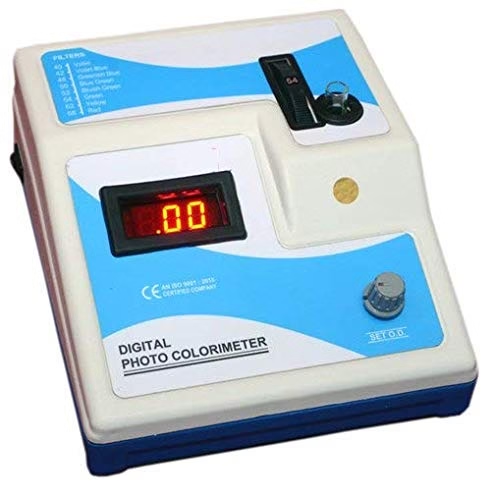
-
Clean cuvettes with distilled water and lens tissue only.
-
Avoid touching optical surfaces with fingers.
-
Keep instrument covered when not in use.
-
Periodically calibrate with standard solutions (e.g., potassium dichromate).
-
Keep in dust-free, vibration-free location.
pH Meters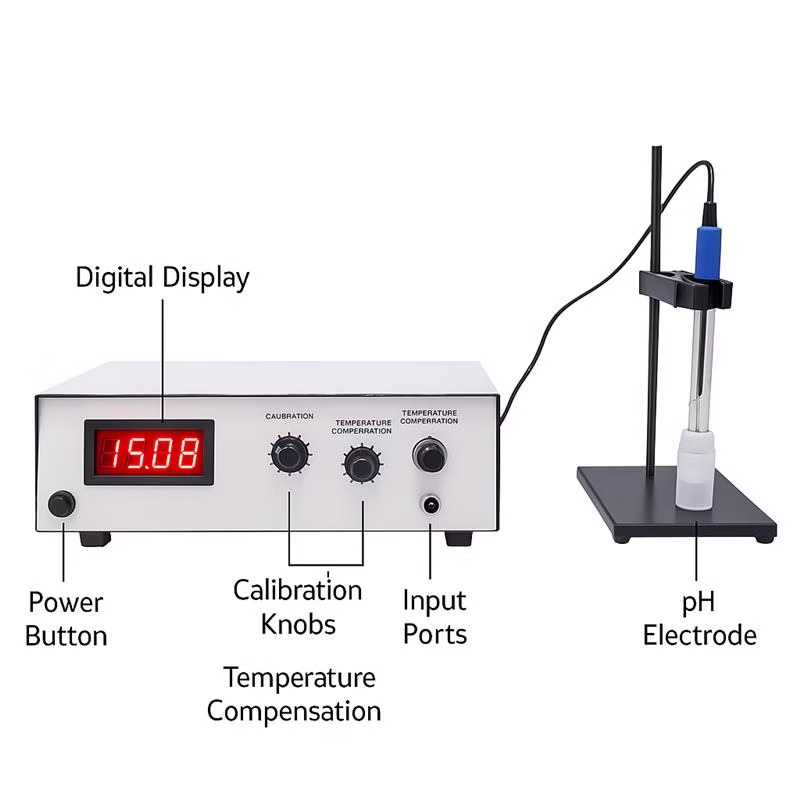
-
Rinse electrode with distilled water between measurements.
-
Never wipe electrode; blot gently.
-
Store electrode in 3 M KCl or manufacturer’s storage solution, never dry.
-
Calibrate daily using pH 4.0, 7.0, and 9.2 buffers.
Balances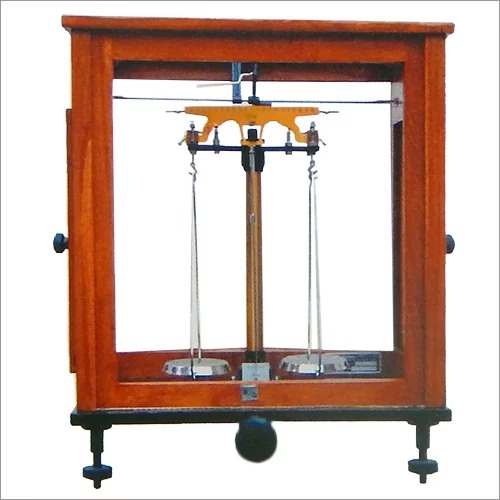
-
Place on vibration-free, level surface.
-
Keep weighing chamber closed during measurement.
-
Clean pan with soft brush; never use liquids.
-
Regularly calibrate with certified standard weights.
Microscopes
-
Use only lens tissue with isopropyl alcohol for optics.
-
Cover microscope after use.
-
Avoid touching objective lenses; clean oil-immersion lens immediately after use.
-
Check alignment and light source regularly.
Glassware Drying Oven and Autoclave
-
Ensure thermostats are accurate.
-
Avoid overloading racks.
-
Periodically check temperature uniformity with thermometer.
-
Clean internal surfaces monthly.
Safety Measures in Cleaning
-
Always wear lab coat, gloves, goggles, and mask.
-
Perform acid cleaning only in fume hoods.
-
Label acid and solvent containers clearly.
-
Never mix acids with chlorinated compounds (toxic chlorine gas may form).
-
Handle hot glassware with tongs or asbestos gloves.
-
Dispose of waste according to biosafety and environmental regulations.
Validation and Quality Control of Cleaning
-
Verify cleanliness by visual inspection (no water droplets, color change, or residues).
-
Phenolphthalein test: If rinsing water turns pink → alkaline residue present.
-
Conductivity test: Final rinse water should have conductivity ≤ that of pure distilled water.
-
Maintain cleaning records/logbooks for instruments.
-
Schedule preventive maintenance and calibration under GLP/ISO 15189 standards.
Common Errors and Their Impacts
| Error | Possible Outcome |
|---|---|
| Insufficient rinsing | Altered assay absorbance, foam formation |
| Using scratched glassware | Adsorption of solutes, contamination |
| Mixing cleaning agents | Toxic fumes or explosive reactions |
| Drying volumetric glassware in oven | Volume calibration drift |
| Using tap water for final rinse | Salt/microbial contamination |
| Improper storage | Dust, fungal growth, or mechanical breakage |
Environmental and Waste Disposal Considerations
-
Neutralize acid or alkali waste before disposal.
-
Collect chromic acid waste separately and dispose through authorized hazardous-waste facility.
-
Reuse rinsing water where possible to reduce water consumption.
-
Prefer eco-friendly enzymatic or biodegradable detergents.
Advanced Cleaning Equipment
-
Ultrasonic Cleaners: Use high-frequency vibrations to dislodge residues; ideal for cuvettes and small glassware.
-
Automatic Glassware Washers: Provide standardized cleaning cycles with controlled temperature and detergent dosing.
-
Autoclaves: Steam sterilization for microbiological glassware.
-
Drying Cabinets with HEPA Filters: Prevent dust contamination during drying.