
Introduction Syphilis is caused by Treponema pallidum, a spirochete bacterium. It is primarily transmitted through sexual contact but can also be passed from mother to child during pregnancy (congenital syphilis). Read More ……..
Simplifying Allied Health Learning.
Introduction Syphilis is caused by Treponema pallidum, a spirochete bacterium. It is primarily transmitted through sexual contact but can also be passed from mother to child during pregnancy (congenital syphilis). Read More ……..
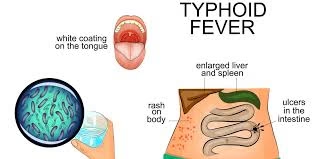
Introduction Typhoid fever is caused by Salmonella enterica serotype Typhi (S. Typhi), a bacterium primarily affecting humans. It is transmitted through contaminated food and water, leading to severe systemic illness Read More ……..
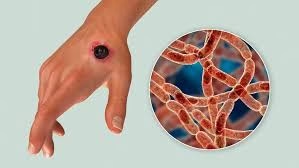
Introduction Anthrax is an infectious disease caused by Bacillus anthracis, a spore-forming, gram-positive rod. The spores of B. anthracis can survive for long periods in the environment, making them a Read More ……..
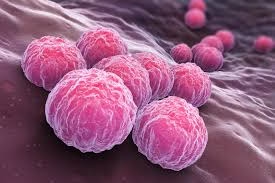
Chlamydia species are significant pathogens responsible for various infections, especially in the urogenital and respiratory tracts. Understanding their characteristics, pathogenic mechanisms, and effective diagnostic methods is crucial for managing infections. Read More ……..
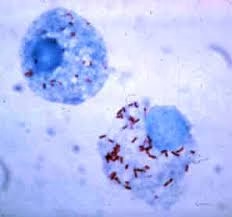
Rickettsia species are significant pathogens that cause febrile illnesses, often transmitted by arthropod vectors. Understanding their characteristics, pathogenic mechanisms, and effective diagnostic methods is crucial for managing infections. Continued public Read More ……..