Introduction
-
Bacillus is a genus of Gram-positive, rod-shaped bacteria
-
Belongs to the family Bacillaceae
-
Widely distributed in soil, water, air, and vegetation
-
Organisms are aerobic or facultative anaerobic
-
Characteristically form endospores
-
Endospores are highly resistant to heat, drying, disinfectants, and chemicals
-
Spores help in survival under adverse environmental conditions
-
Includes both pathogenic and non-pathogenic species
-
Medically important species include:
-
Bacillus anthracis – causes anthrax
-
Bacillus cereus – causes food poisoning and opportunistic infections
-
Bacillus subtilis – usually non-pathogenic, used in research and industry
-
-
Pathogenicity is mainly due to toxin production, capsule formation, and enzymes
-
Important genus in medical microbiology, public health, and laboratory diagnosis
General Character
Genus: Bacillus
Family
-
Bacillaceae
Key Species
-
Bacillus anthracis – Causes anthrax
-
Bacillus cereus – Causes food poisoning (emetic & diarrheal types), eye infections, sepsis
-
Bacillus subtilis – Non-pathogenic; widely used in research, probiotics, and industry
Morphology
-
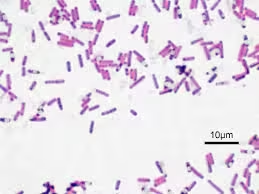
Gram reaction: Gram-positive (purple)
-
Shape: Large rod-shaped bacilli
-
Arrangement: Single cells, pairs, or chains
-
Size: Large bacteria (except B. anthracis which is relatively uniform)
Spore Formation
-
Endospore-forming
-
Spores are:
-
Oval or cylindrical
-
Central, subterminal, or terminal (species-dependent)
-
Do not bulge the cell (important differentiation point)
-
Motility
-
Motile: Most species (peritrichous flagella)
-
Non-motile: Bacillus anthracis (important diagnostic clue)
Oxygen Requirement
-
Aerobic or facultative anaerobic
-
Majority are obligate aerobes
-
Some species can grow anaerobically by fermentation
Morphology
-
Gram reaction: Gram-positive (appear purple on Gram staining due to thick peptidoglycan layer)
-
Shape: Large, straight rod-shaped bacilli
-
Size: Relatively large bacteria (≈ 1–1.5 µm × 3–10 µm)
-
Arrangement:
-
Single cells
-
Pairs
-
Chains (especially Bacillus anthracis)
-
-
Ends of cells:
-
Square or blunt ends (classically seen in B. anthracis – “box-car” appearance)
-
-
Spore formation:
-
Endospore-forming
-
Spores may be central, subterminal, or terminal
-
Spores are oval/cylindrical
-
Do not cause bulging of the bacterial cell
-
-
Motility:
-
Motile in most species (peritrichous flagella)
-
Non-motile: Bacillus anthracis (important diagnostic feature)
-
-
Capsule:
-
Usually absent
-
Present in Bacillus anthracis (polypeptide capsule made of poly-D-glutamic acid)
-
Cultural Characteristics
Cultural Characteristics of Genus: Bacillus
-
Growth requirements:
-
Non-fastidious organisms
-
Grow well on ordinary culture media
-
Optimal temperature: 35–37°C
-
Aerobic conditions preferred
-
On Nutrient Agar
-
Growth is rapid (18–24 hours)
-
Colonies are:
-
Large
-
Opaque
-
Rough or smooth (species dependent)
-
Irregular margins
-
-
Often produce a dry, matte or ground-glass appearance
On Blood Agar
-
Large, spreading colonies
-
Hemolysis pattern:
-
β-hemolysis: Bacillus cereus
-
Non-hemolytic: Bacillus anthracis (important differentiating feature)
-
Bacillus anthracis colonies:
-
Gray-white
-
Non-hemolytic
-
“Medusa head” appearance (curled, filamentous edges)
-
Tenacious colonies – stand up like beaten egg white when touched with loop
On Selective / Differential Media
-
Polymyxin–pyruvate–egg yolk–mannitol agar (PEMBA):
-
Used for B. cereus
-
Blue-green colonies with lecithinase activity (opaque halo)
-
-
Egg yolk agar:
-
B. cereus → Lecithinase positive
-
B. anthracis → Lecithinase negative
-
In Liquid Media (Broth)
-
Uniform turbidity
-
Surface pellicle formation may be seen
-
Sediment may be present at the bottom
Special Cultural Features
-
Spores are formed in old cultures
-
Growth often has a musty or earthy odor (especially B. subtilis)
-
Resistant spores survive adverse environmental conditions
Biochemical Reactions
Biochemical Reactions of Genus: Bacillus
-
Catalase test: Positive
-
Oxidase test: Variable (usually positive in many species)
-
Indole test: Negative
-
Methyl Red (MR): Variable
-
Voges–Proskauer (VP): Variable (often positive in B. cereus)
-
Citrate utilization: Variable
Carbohydrate Fermentation
-
Ferment carbohydrates aerobically
-
Acid production common; gas usually absent
-
Glucose fermented by most species
-
Lactose fermentation: variable
Enzyme Production
-
Amylase: Positive (B. subtilis strongly positive)
-
Protease: Positive
-
Lipase: Positive in B. cereus
-
Lecithinase:
-
Positive: Bacillus cereus
-
Negative: Bacillus anthracis
-
Nitrate Reduction
-
Most species reduce nitrate to nitrite
-
B. anthracis → Positive
Urease Test
-
Negative
Gelatin Hydrolysis
-
Positive (liquefaction of gelatin)
Special Biochemical Tests
| Test | B. anthracis | B. cereus | B. subtilis |
|---|---|---|---|
| Catalase | Positive | Positive | Positive |
| Motility | Non-motile | Motile | Motile |
| Hemolysis | Negative | β-hemolytic | Variable |
| Lecithinase | Negative | Positive | Negative |
| Starch hydrolysis | Negative | Variable | Positive |
| Nitrate reduction | Positive | Positive | Positive |
Pathogenicity
Bacillus anthracis
Virulence Factors
-
Capsule
-
Made of poly-D-glutamic acid (polypeptide, not polysaccharide)
-
Anti-phagocytic
-
-
Anthrax Toxin (Tripartite Exotoxin)
-
Protective Antigen (PA): Binds to host cell receptors and facilitates entry of EF and LF
-
Edema Factor (EF): Adenylate cyclase → ↑ cAMP → edema
-
Lethal Factor (LF): Zinc-dependent metalloprotease → macrophage death, cytokine release, shock
-
Toxin combinations
-
PA + EF → Edema toxin
-
PA + LF → Lethal toxin
Types of Anthrax
-
Cutaneous anthrax (most common)
-
Entry through skin abrasion
-
Painless papule → vesicle → black eschar
-
Surrounding edema
-
-
Inhalational anthrax (wool-sorter’s disease)
-
Inhalation of spores
-
Hemorrhagic mediastinitis
-
High mortality
-
-
Gastrointestinal anthrax
-
Ingestion of contaminated meat
-
Ulcers, bleeding, diarrhea
-
Bacillus cereus
Virulence Factors
-
Emetic toxin (Cereulide)
-
Heat-stable
-
Acts on vomiting center
-
-
Enterotoxins
-
Heat-labile
-
Cause increased intestinal secretion
-
-
Tissue-destructive enzymes
-
Lecithinase, protease, hemolysin
-
Clinical Syndromes
-
Food poisoning
-
Emetic type:
-
Rice, starchy food
-
Incubation: 1–6 hours
-
Nausea, vomiting
-
-
Diarrheal type:
-
Meat, vegetables
-
Incubation: 8–16 hours
-
Watery diarrhea, abdominal cramps
-
-
-
Extra-intestinal infections
-
Endophthalmitis
-
Wound infections
-
Septicemia (immunocompromised)
-
3. Other Bacillus Species
-
B. subtilis
-
Usually non-pathogenic
-
Rare opportunistic infections
-
Laboratory Diagnosis
1. Specimen Collection
Bacillus anthracis
-
Cutaneous anthrax → Vesicular fluid / exudate, blood
-
Inhalational anthrax → Blood, sputum
-
GI anthrax → Stool, blood
Do not open eschar (risk of aerosolization)
Bacillus cereus
-
Food poisoning → Food sample, vomitus, stool
-
Systemic infection → Blood, eye discharge, wound swab
2. Direct Microscopy
-
Gram stain
-
Large Gram-positive bacilli
-
Square ends
-
Arranged in chains (B. anthracis)
-
-
Spore stain
-
Central/subterminal spores
-
-
Capsule demonstration (B. anthracis)
-
Polychrome methylene blue → McFadyean reaction
-
Capsule appears pinkish-purple
-
3. Culture
Media Used
-
Blood agar
-
Nutrient agar
-
Selective media (for B. cereus)
Colony Characteristics
| Feature | B. anthracis | B. cereus |
|---|---|---|
| Blood agar | Non-hemolytic | β-hemolytic |
| Colony edge | Medusa head | Irregular |
| Motility | Non-motile | Motile |
| Lecithinase | Negative | Positive (egg yolk agar) |
4. Biochemical Tests
-
Catalase → Positive
-
Nitrate reduction → Positive
-
Motility test → Key differentiator
-
Lecithinase test
-
Positive in B. cereus
-
Negative in B. anthracis
-
5. Special Tests (Important for B. anthracis)
String of Pearls Test
-
Growth on penicillin-containing media
-
B. anthracis forms spherical cells in chains
-
Highly suggestive
Gamma Phage Lysis Test
-
Positive in B. anthracis
-
Specific and confirmatory
6. Molecular & Immunological Tests
-
PCR for toxin genes (PA, EF, LF)
-
ELISA for anthrax toxins or antibodies
-
Used in reference laboratories
7. Animal Inoculation Test (Historical)
-
Inoculation in mice/guinea pigs
-
Death with septicemia
-
Rarely used now
8. Diagnosis of B. cereus Food Poisoning
-
Isolation from:
-
Food sample
-
Stool/vomit
-
-
Demonstration of enterotoxin / emetic toxin
-
Clinical correlation essential
Antibiotic Resistance
General Features
-
Bacillus species show variable antibiotic susceptibility
-
Resistance is mainly due to:
-
β-lactamase production
-
Altered penicillin-binding proteins
-
Plasmid-mediated resistance genes
-
-
Spores are highly resistant to antibiotics, disinfectants, heat, and drying
(important: spores survive treatment, vegetative cells are killed)
1. Bacillus anthracis
Resistance Pattern
-
Naturally resistant to:
-
Penicillin (many strains produce β-lactamase)
-
Cephalosporins (poor activity)
-
-
Usually sensitive to:
-
Ciprofloxacin
-
Doxycycline
-
Tetracycline
-
Erythromycin
-
Chloramphenicol
-
Acquired Resistance
-
Rare but reported (plasmid-mediated)
-
Bioterrorism-related strains may show multidrug resistance
Exam pearl:
Penicillin is not the drug of choice for anthrax due to possible β-lactamase production.
2. Bacillus cereus
Resistance Pattern
-
Inherently resistant to:
-
Penicillins
-
Cephalosporins
-
β-lactam antibiotics (strong β-lactamase producer)
-
-
Usually sensitive to:
-
Vancomycin
-
Clindamycin
-
Ciprofloxacin
-
Gentamicin
-
Linezolid
-
Very important point:
B. cereus is always resistant to penicillin.
3. Other Bacillus Species
-
B. subtilis:
-
Generally sensitive to many antibiotics
-
Resistance uncommon and clinically insignificant
-
Clinical Correlation
| Species | Key Resistance | Preferred Drugs |
|---|---|---|
| B. anthracis | Penicillin resistance (β-lactamase) | Ciprofloxacin, Doxycycline |
| B. cereus | Penicillins & cephalosporins | Vancomycin, Clindamycin |
| B. subtilis | Minimal resistance | Rarely needed |
Prevention
1. General Preventive Measures
-
Proper hygiene and sanitation
-
Safe handling and disposal of animal products (wool, hides, bones)
-
Thorough cooking and proper storage of food
-
Avoid consumption of leftover rice / improperly stored food (B. cereus)
-
Hospital infection control:
-
Sterilization of instruments
-
Proper wound care
-
2. Prevention of Anthrax (Bacillus anthracis)
A. Control in Animals (Most Important)
-
Vaccination of livestock (live attenuated Sterne strain)
-
Quarantine of infected animals
-
Proper disposal of carcasses:
-
Burning or deep burial with lime
-
-
Avoid opening carcasses of animals that died suddenly
B. Human Vaccination
-
Anthrax vaccine (AVA – Adsorbed vaccine)
-
Cell-free filtrate containing Protective Antigen
-
Given to:
-
Veterinarians
-
Laboratory workers
-
Wool, hide, and leather industry workers
-
Military personnel (high-risk groups)
-
-
C. Post-Exposure Prophylaxis (Anthrax)
-
Ciprofloxacin or Doxycycline
-
Duration: 60 days
-
Combined with vaccination in high-risk exposure
3. Prevention of Bacillus cereus Food Poisoning
-
Cook food thoroughly
-
Do not leave cooked rice or starchy food at room temperature
-
Refrigerate food promptly (<4°C)
-
Reheat food adequately before consumption
-
Maintain food hygiene in hotels, hostels, and canteens
4. Laboratory Safety Measures
-
Biosafety level precautions while handling suspected anthrax samples
-
Avoid aerosol generation
-
Proper labeling and transport of specimens
MCQs
1. Bacillus species are classified under which family?
A. Enterobacteriaceae
B. Bacillaceae
C. Clostridiaceae
D. Micrococcaceae
✅ Answer: B
2. Which Bacillus species causes anthrax?
A. B. cereus
B. B. subtilis
C. B. anthracis
D. B. licheniformis
✅ Answer: C
3. Gram reaction of Bacillus species is:
A. Gram-negative
B. Gram-variable
C. Gram-positive
D. Acid-fast
✅ Answer: C
4. Shape of Bacillus organisms is:
A. Cocci
B. Curved rods
C. Spiral
D. Straight rods
✅ Answer: D
5. Arrangement of Bacillus anthracis is typically:
A. Clusters
B. Chains
C. Diplococci
D. Palisades
✅ Answer: B
6. Which Bacillus is non-motile?
A. B. cereus
B. B. subtilis
C. B. anthracis
D. B. megaterium
✅ Answer: C
7. Endospores of Bacillus species are:
A. Heat sensitive
B. Acid fast
C. Highly resistant
D. Bulging the cell
✅ Answer: C
8. Spores of Bacillus usually do NOT:
A. Bulge the cell
B. Survive harsh conditions
C. Resist heat
D. Remain dormant
✅ Answer: A
9. Oxygen requirement of Bacillus species is mainly:
A. Obligate anaerobe
B. Microaerophile
C. Aerobic or facultative anaerobe
D. Capnophile
✅ Answer: C
10. Capsule of Bacillus anthracis is composed of:
A. Polysaccharide
B. Lipopolysaccharide
C. Poly-D-glutamic acid
D. Peptidoglycan
✅ Answer: C
11. Bacillus anthracis colony on blood agar is:
A. α-hemolytic
B. β-hemolytic
C. Non-hemolytic
D. Double zone hemolysis
✅ Answer: C
12. “Medusa head” colony is characteristic of:
A. B. cereus
B. B. anthracis
C. B. subtilis
D. B. megaterium
✅ Answer: B
13. Which Bacillus shows β-hemolysis on blood agar?
A. B. anthracis
B. B. cereus
C. B. subtilis
D. All
✅ Answer: B
14. Which test demonstrates capsule of B. anthracis?
A. Ziehl–Neelsen stain
B. India ink
C. McFadyean reaction
D. Albert stain
✅ Answer: C
15. McFadyean reaction uses:
A. Gram stain
B. Polychrome methylene blue
C. Carbol fuchsin
D. Malachite green
✅ Answer: B
16. Major virulence factor of B. anthracis is:
A. Endotoxin
B. Capsule only
C. Tripartite exotoxin
D. Hemolysin
✅ Answer: C
17. Protective antigen is responsible for:
A. Edema
B. Cell binding and entry
C. Cell death
D. Capsule formation
✅ Answer: B
18. Edema factor acts by increasing:
A. cGMP
B. Calcium
C. cAMP
D. ATP
✅ Answer: C
19. Lethal factor is a:
A. Lipase
B. Protease
C. Metalloprotease
D. Kinase
✅ Answer: C
20. Most common form of anthrax is:
A. Inhalational
B. Gastrointestinal
C. Cutaneous
D. Septicemic
✅ Answer: C
21. Black eschar is seen in:
A. Plague
B. Cutaneous anthrax
C. Diphtheria
D. Gas gangrene
✅ Answer: B
22. Food poisoning due to B. cereus is commonly associated with:
A. Milk
B. Rice
C. Eggs
D. Meat only
✅ Answer: B
23. Emetic toxin of B. cereus is:
A. Heat labile
B. Heat stable
C. Protein antigen
D. Endotoxin
✅ Answer: B
24. Incubation period of emetic type food poisoning is:
A. 12–24 h
B. 8–16 h
C. 1–6 h
D. 2–3 days
✅ Answer: C
25. Lecithinase test is positive in:
A. B. anthracis
B. B. subtilis
C. B. cereus
D. All
✅ Answer: C
26. String of pearls test is positive in:
A. B. cereus
B. B. anthracis
C. B. subtilis
D. Clostridium
✅ Answer: B
27. Gamma phage lysis test is specific for:
A. B. cereus
B. B. subtilis
C. B. anthracis
D. C. tetani
✅ Answer: C
28. Catalase test in Bacillus species is:
A. Negative
B. Variable
C. Positive
D. Weakly positive
✅ Answer: C
29. Which Bacillus is always resistant to penicillin?
A. B. anthracis
B. B. cereus
C. B. subtilis
D. None
✅ Answer: B
30. Drug of choice for anthrax is:
A. Penicillin
B. Amoxicillin
C. Ciprofloxacin
D. Erythromycin
✅ Answer: C
31. Spores of Bacillus are resistant to antibiotics because:
A. They multiply rapidly
B. They are metabolically inactive
C. They produce enzymes
D. They form capsule
✅ Answer: B
32. Anthrax vaccine contains:
A. Live bacilli
B. Killed spores
C. Protective antigen
D. Capsule antigen
✅ Answer: C
33. Anthrax vaccine is recommended for:
A. General population
B. Children
C. High-risk occupational groups
D. Pregnant women
✅ Answer: C
34. Best prevention of anthrax is:
A. Human vaccination
B. Antibiotics
C. Animal vaccination
D. Quarantine only
✅ Answer: C
35. Which Bacillus is commonly non-pathogenic?
A. B. anthracis
B. B. cereus
C. B. subtilis
D. B. thuringiensis
✅ Answer: C
36. B. cereus diarrheal toxin is:
A. Preformed
B. Heat stable
C. Heat labile
D. Endotoxin
✅ Answer: C
37. Blood culture in anthrax usually shows:
A. No growth
B. Gram-negative rods
C. Gram-positive bacilli in chains
D. Cocci
✅ Answer: C
38. Bacillus spores germinate when:
A. Conditions are unfavorable
B. Antibiotics present
C. Favorable conditions return
D. Oxygen absent
✅ Answer: C
39. Which medium is used for lecithinase detection?
A. Blood agar
B. MacConkey agar
C. Egg yolk agar
D. TCBS
✅ Answer: C
40. In broth culture, Bacillus typically produces:
A. Clear broth
B. Pellicle and turbidity
C. Only sediment
D. Gas bubbles
✅ Answer: B
41. Bacillus species are commonly found in:
A. Human intestine only
B. Soil
C. Water only
D. Animals only
✅ Answer: B
42. Which Bacillus is motile?
A. B. anthracis
B. B. cereus
C. Both A and B
D. None
✅ Answer: B
43. The capsule of B. anthracis helps in:
A. Toxin production
B. Sporulation
C. Anti-phagocytosis
D. Motility
✅ Answer: C
44. Bacillus cereus food poisoning is usually:
A. Fatal
B. Mild and self-limiting
C. Chronic
D. Septicemic
✅ Answer: B
45. Which Bacillus produces β-lactamase?
A. B. anthracis
B. B. cereus
C. B. subtilis
D. All
✅ Answer: D
46. A non-hemolytic, non-motile Gram-positive rod suggests:
A. B. cereus
B. B. subtilis
C. B. anthracis
D. Clostridium perfringens
✅ Answer: C
47. Post-exposure prophylaxis for anthrax is given for:
A. 7 days
B. 14 days
C. 30 days
D. 60 days
✅ Answer: D
48. Bacillus spores are best destroyed by:
A. Alcohol
B. Boiling
C. Autoclaving
D. Phenol
✅ Answer: C
49. Which toxin causes vomiting in B. cereus infection?
A. Enterotoxin
B. Cereulide
C. Endotoxin
D. Lethal toxin
✅ Answer: B
50. Bacillus belongs to which Gram-positive group?
A. Non-sporing cocci
B. Spore-forming rods
C. Branching filaments
D. Acid-fast bacilli
✅ Answer: B