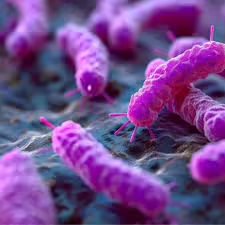
Introduction
-
Bordetella is a genus of small, Gram-negative, aerobic coccobacilli.
-
Bordetella pertussis is the principal causative agent of whooping cough (pertussis).
-
Whooping cough is a highly contagious respiratory disease transmitted via respiratory droplets.
-
The organism primarily infects the ciliated epithelium of the respiratory tract.
-
Bordetella produces several potent toxins and adhesins that contribute to disease severity.
-
The infection is characterized clinically by paroxysmal coughing, inspiratory whoop, and post-tussive vomiting.
-
Laboratory diagnosis involves culture, PCR, and serological methods.
-
Whole-cell and acellular pertussis vaccines play a vital role in disease prevention.
-
Re-emergence of pertussis highlights the importance of booster immunization and surveillance.
-
Understanding Bordetella biology is essential for clinical microbiology, epidemiology, and public health control.
General Character
Family
-
Bordetellaceae
Species and Clinical Significance
-
Bordetella pertussis
-
Primary causative agent of whooping cough (pertussis) in humans
-
Causes severe disease, especially in infants and young children
-
-
Bordetella parapertussis
-
Causes a milder, pertussis-like illness
-
Clinical features resemble whooping cough but are generally less severe
-
Does not produce pertussis toxin
-
-
Bordetella bronchiseptica
-
Primarily causes respiratory infections in animals (e.g., kennel cough in dogs)
-
Can cause opportunistic respiratory infections in humans, especially immunocompromised individuals
-
Morphology and Staining Characteristics
Gram Staining
-
Gram-negative bacteria
-
Appear pink on Gram staining due to:
-
Thin peptidoglycan layer
-
Presence of an outer membrane containing lipopolysaccharide (LPS)
-
Shape
-
Small coccobacilli
-
Short, plump rod-shaped organisms
Arrangement
-
Usually seen as:
-
Single cells
-
Occasionally in small clusters
-
-
Do not form chains or spores
Oxygen Requirements
-
Obligate aerobes
-
Require oxygen for growth
-
Growth occurs best under aerobic laboratory conditions
Morphology
-
Size
-
Very small bacteria
-
Measure approximately 0.2–0.5 µm × 0.5–1.0 µm
-
-
Shape
-
Coccobacilli (short, plump rods)
-
Appear intermediate between cocci and bacilli
-
-
Gram Reaction
-
Gram-negative
-
Stain pink on Gram staining due to:
-
Thin peptidoglycan layer
-
Presence of outer membrane
-
-
-
Arrangement
-
Occur singly
-
Sometimes seen in small clusters
-
Do not form chains or palisades
-
-
Motility
-
Non-motile
-
Lack flagella
-
-
Capsule
-
True capsule absent
-
However, surface adhesins (e.g., filamentous hemagglutinin) provide capsule-like protective function
-
-
Spores
-
Non-sporing
-
-
Pleomorphism
-
Minimal pleomorphism
-
Morphology remains fairly uniform
-
-
Special Staining Features
-
Poorly stained with routine stains
-
Best visualized in:
-
Gram stain
-
Immunofluorescence staining (direct fluorescent antibody test)
-
-
Cultural Characteristics
1. Growth Requirements
-
Fastidious organisms, especially Bordetella pertussis
-
Require enriched media
-
Strictly aerobic
-
Optimal growth temperature: 35–37 °C
-
Optimal pH: 7.2–7.6
-
Growth is slow, visible after 3–7 days
2. Primary Culture Media
A. Bordet–Gengou Agar
-
Medium of choice for B. pertussis
-
Composition:
-
Potato infusion
-
Glycerol
-
Blood (15–20%)
-
-
Blood neutralizes toxic fatty acids
-
Glycerol enhances growth
Colony Morphology
-
Small, smooth, convex
-
Glistening, pearly, dome-shaped colonies
-
Described as “mercury drop” appearance
-
Non-hemolytic
B. Regan–Lowe Medium
-
Charcoal agar with:
-
10% horse blood
-
Cephalexin (selective agent)
-
-
Preferred in modern laboratories
-
Advantages:
-
Less toxic than Bordet–Gengou
-
Better recovery from clinical specimens
-
Supports transport and prolonged survival
-
3. Growth on Other Media
-
Blood agar:
-
B. pertussis: poor or no growth
-
B. bronchiseptica: may grow
-
-
MacConkey agar:
-
B. pertussis → no growth
-
B. bronchiseptica → may grow (non-lactose fermenter)
-
4. Colony Variations (Phase Variation – B. pertussis)
| Phase | Characteristics | Virulence |
|---|---|---|
| Phase I | Smooth, dome-shaped, hemagglutinating | Fully virulent |
| Phase II–IV | Rough, irregular colonies | Reduced or avirulent |
5. Cultural Differences Among Bordetella Species
| Feature | B. pertussis | B. parapertussis | B. bronchiseptica |
|---|---|---|---|
| Growth rate | Slow | Faster | Faster |
| Bordet–Gengou | Good growth | Good growth | Good growth |
| Regan–Lowe | Excellent | Excellent | Excellent |
| Blood agar | Poor | Moderate | Good |
| MacConkey agar | No growth | No growth | Growth present |
6. Atmospheric Requirements
-
Strict aerobes
-
No growth under anaerobic conditions
-
Increased CO₂ may enhance early growth
7. Transport of Specimens
-
Organism is fragile
-
Best specimens:
-
Nasopharyngeal swab/aspirate
-
-
Transport media:
-
Regan–Lowe transport medium
-
Avoid cotton swabs (toxic fatty acids)
-
Biochemical Reactions
A. Oxidase Test
-
B. pertussis → Positive
-
B. parapertussis → Positive
-
B. bronchiseptica → Positive
Useful screening test
B. Catalase Test
-
All Bordetella species → Positive
C. Urease Test
| Species | Urease Activity |
|---|---|
| B. pertussis | Negative |
| B. parapertussis | Positive |
| B. bronchiseptica | Strongly Positive (Rapid) |
Most important test to differentiate Bordetella species
D. Nitrate Reduction Test
| Species | Nitrate Reduction |
|---|---|
| B. pertussis | Negative |
| B. parapertussis | Negative |
| B. bronchiseptica | Positive |
E. Citrate Utilization
-
All Bordetella species → Negative
F. Indole Test
-
All Bordetella species → Negative
G. Carbohydrate Fermentation
-
No carbohydrate fermentation
-
Glucose, lactose, sucrose → Not fermented
-
Hence non-acid producing
Summary Table
| Test | B. pertussis | B. parapertussis | B. bronchiseptica |
|---|---|---|---|
| Oxidase | + | + | + |
| Catalase | + | + | + |
| Urease | − | + | ++ |
| Nitrate reduction | − | − | + |
| Indole | − | − | − |
| Citrate | − | − | − |
| Sugar fermentation | − | − | − |
Pathogenicity
Source and Transmission
-
Source of infection: Infected human (symptomatic or asymptomatic carrier)
-
Mode of transmission: Respiratory droplets (coughing, sneezing)
-
Highly infectious; secondary attack rate is high
Portal of Entry and Site of Infection
-
Entry via upper respiratory tract
-
Organism attaches to ciliated epithelial cells of:
-
Nasopharynx
-
Trachea
-
Bronchi
-
-
No bloodstream invasion
Virulence Factors and Their Role
A. Adhesins (Colonization Factors)
-
Filamentous Hemagglutinin (FHA)
-
Major adhesin
-
Mediates attachment to ciliated epithelium and macrophages
-
-
Pertactin
-
Outer membrane protein
-
Facilitates tight adhesion to respiratory epithelium
-
-
Fimbriae (Agglutinogens 2 & 3)
-
Help in adherence
-
Important antigens in acellular vaccines
-
B. Toxins (Major Determinants of Disease)
1. Pertussis Toxin (PT)
-
AB₅ exotoxin
-
ADP-ribosylates Gi protein → ↑ cAMP
-
Effects:
-
Lymphocytosis
-
Inhibition of phagocytosis
-
Increased insulin secretion → hypoglycemia
-
-
Responsible for systemic manifestations
2. Adenylate Cyclase Toxin (ACT)
-
Enters phagocytes
-
Converts ATP → cAMP
-
Inhibits:
-
Neutrophil function
-
Macrophage killing
-
3. Tracheal Cytotoxin (TCT)
-
Peptidoglycan fragment
-
Causes:
-
Destruction of ciliated epithelial cells
-
Loss of mucociliary clearance
-
-
Responsible for persistent cough
4. Dermonecrotic Toxin
-
Causes local tissue damage
-
Vasoconstrictive effects
C. Endotoxin (LPS)
-
Contributes to:
-
Inflammation
-
Fever
-
Local tissue injury
-
Laboratory Diagnosis
Specimen Collection
A. Type of Specimen
-
Nasopharyngeal swab (preferred)
-
Nasopharyngeal aspirate (highest yield)
B. Technique
-
Use:
-
Dacron / calcium alginate swab
-
-
Avoid:
-
Cotton swabs (contain fatty acids toxic to Bordetella)
-
C. Transport
-
Organism is fragile
-
Transport immediately in:
-
Regan–Lowe transport medium
-
Direct Microscopy
-
Gram staining
-
Small Gram-negative coccobacilli
-
-
Sensitivity is low
-
Mainly supportive, not confirmatory
Culture
Media Used
-
Bordet–Gengou agar
-
Regan–Lowe medium (preferred)
Incubation
-
35–37°C
-
Strictly aerobic
-
Observe for 3–7 days
Colony Morphology
-
Small, smooth, convex
-
Glistening “mercury-drop” colonies
-
Non-hemolytic
Culture positivity highest in catarrhal stage
Biochemical Identification
-
Oxidase: Positive
-
Catalase: Positive
-
Urease: Negative (key feature of B. pertussis)
-
Nitrate reduction: Negative
Molecular Methods
PCR (Polymerase Chain Reaction)
-
Target genes:
-
IS481
-
Pertussis toxin gene
-
-
Advantages:
-
Rapid
-
Highly sensitive and specific
-
Useful even after antibiotic therapy
-
-
Preferred diagnostic test in modern labs
Serological Tests
ELISA
-
Detects antibodies against:
-
Pertussis toxin
-
FHA
-
-
Useful in:
-
Late stages
-
Adolescents and adults
-
-
Not useful in early disease or vaccinated children
Direct Fluorescent Antibody (DFA) Test
-
Detects organisms directly from specimen
-
Rapid but:
-
Low specificity
-
False positives common
-
-
Largely obsolete
Hematological Findings
-
Marked lymphocytosis
-
Total leukocyte count may exceed 20,000–50,000 /mm³
-
Characteristic of pertussis toxin effect
Antibiotic Resistance
Drugs of Choice and Susceptibility
Macrolides
-
Erythromycin
-
Azithromycin
-
Clarithromycin
Alternative Drugs
-
Trimethoprim–Sulfamethoxazole (Co-trimoxazole)
-
Used in macrolide intolerance or resistance
-
Effective in patients ≥2 months of age
-
Resistance Patterns
A. Macrolide Resistance
-
Historically rare
-
Increasing reports worldwide
-
Mechanisms:
-
23S rRNA gene mutations
-
Reduced macrolide binding to ribosomal target
-
-
Clinically significant in:
-
Prolonged illness
-
Treatment failure
-
B. β-lactam Antibiotics
-
B. pertussis is intrinsically resistant to:
-
Penicillins
-
Cephalosporins
-
-
Reason:
-
Poor penetration
-
Lack of target efficacy
-
-
Not recommended for treatment
C. Fluoroquinolones
-
In vitro activity present
-
Not routinely used
-
Reserved for special circumstances in adults
D. Aminoglycosides
-
Poor intracellular penetration
-
Limited clinical role
Species-wise Resistance
Bordetella pertussis
-
Usually susceptible to macrolides
-
Emerging macrolide resistance (regional variation)
Bordetella parapertussis
-
Less sensitive to macrolides than B. pertussis
-
Generally responsive to macrolides and TMP-SMX
Bordetella bronchiseptica
-
More resistant
-
Often resistant to:
-
Macrolides
-
First-generation cephalosporins
-
-
Susceptible to:
-
Fluoroquinolones
-
Aminoglycosides
-
TMP-SMX
-
Antibiotic Susceptibility Testing
-
Not routinely done for B. pertussis
-
Performed in:
-
Outbreaks
-
Treatment failure
-
Surveillance studies
-
-
Methods:
-
MIC determination
-
PCR detection of resistance mutations
-
Prevention
Active Immunization
A. Types of Pertussis Vaccines
1. Whole-Cell Pertussis Vaccine (wP)
-
-
-
Contains killed whole B. pertussis
-
Strong immunogenicity
-
More adverse effects:
-
Fever
-
Local reactions
-
-
Used widely in developing countries
-
-
2. Acellular Pertussis Vaccine (aP)
-
-
-
Contains purified antigens:
-
Pertussis toxin (PT)
-
Filamentous hemagglutinin (FHA)
-
Pertactin
-
Fimbriae
-
-
Fewer side effects
-
Used mainly in developed countries
-
-
B. Vaccines in Use
-
-
-
Given as DPT / DTaP / Tdap
-
DPT (wP)
-
DTaP (aP for children)
-
Tdap (booster for adolescents & adults)
-
-
-
C. National Immunization Schedule
| Age | Vaccine |
|---|---|
| 6 weeks | DPT-1 |
| 10 weeks | DPT-2 |
| 14 weeks | DPT-3 |
| 16–24 months | DPT booster |
| 5 years | DPT booster |
| Adolescents / Adults | Tdap (recommended) |
| Pregnancy | Tdap in 3rd trimester |
Passive Immunization
-
-
-
No role for routine passive immunization
-
Maternal antibodies provide partial protection to neonates
-
-
Chemoprophylaxis
-
-
-
Recommended for:
-
Household contacts
-
Healthcare workers
-
High-risk individuals (infants, pregnant women)
-
-
-
Drugs Used
-
-
-
Macrolides (Azithromycin / Erythromycin)
-
TMP-SMX (alternative)
-
-
Isolation and Infection Control
-
-
-
Isolation of confirmed cases:
-
For 5 days after starting antibiotics
-
-
Use of:
-
Droplet precautions
-
Masks and hand hygiene
-
-
-
Health Education & Public Health Measures
-
-
-
Early reporting of cases
-
Completion of immunization schedule
-
Booster doses in adolescents and adults
-
Surveillance for:
-
Vaccine failures
-
Resurgence of disease
-
-
-
Reasons for Re-emergence of Pertussis
-
-
Waning immunity (especially with acellular vaccines)
-
Incomplete vaccination
-
Antigenic variation
-
Increased awareness and improved diagnostics
-
MCQs
1. Bordetella pertussis belongs to which family?
A. Enterobacteriaceae
B. Neisseriaceae
C. Bordetellaceae
D. Pasteurellaceae
✅ Answer: C
2. Morphology of Bordetella pertussis is best described as:
A. Gram-positive cocci
B. Gram-negative bacilli
C. Gram-negative coccobacilli
D. Acid-fast bacilli
✅ Answer: C
3. Bordetella species are:
A. Facultative anaerobes
B. Obligate anaerobes
C. Microaerophilic
D. Obligate aerobes
✅ Answer: D
4. Best specimen for laboratory diagnosis of pertussis is:
A. Throat swab
B. Sputum
C. Nasopharyngeal swab
D. Blood
✅ Answer: C
5. Culture medium of choice for Bordetella pertussis is:
A. Chocolate agar
B. Blood agar
C. MacConkey agar
D. Bordet–Gengou agar
✅ Answer: D
6. Colony appearance of Bordetella pertussis on Bordet–Gengou agar is:
A. Beta-hemolytic colonies
B. Mucoid colonies
C. Mercury drop colonies
D. Dry wrinkled colonies
✅ Answer: C
7. Regan–Lowe medium contains which selective agent?
A. Vancomycin
B. Cephalexin
C. Colistin
D. Amphotericin B
✅ Answer: B
8. Bordetella pertussis is biochemically characterized by:
A. Fermentation of glucose
B. Lactose fermentation
C. Urease positivity
D. Urease negativity
✅ Answer: D
9. Which Bordetella species is strongly urease positive?
A. B. pertussis
B. B. parapertussis
C. B. bronchiseptica
D. All of the above
✅ Answer: C
10. Oxidase reaction of Bordetella species is:
A. Negative
B. Variable
C. Weakly positive
D. Positive
✅ Answer: D
11. Bordetella pertussis causes disease mainly by:
A. Tissue invasion
B. Endotoxin only
C. Toxin-mediated damage
D. Septicemia
✅ Answer: C
12. Primary site of Bordetella pertussis infection is:
A. Alveoli
B. Bloodstream
C. Ciliated respiratory epithelium
D. Lymph nodes
✅ Answer: C
13. The most important adhesin of Bordetella pertussis is:
A. Lipopolysaccharide
B. Filamentous hemagglutinin
C. Capsule
D. Flagella
✅ Answer: B
14. Pertussis toxin acts by:
A. Inhibiting protein synthesis
B. ADP-ribosylating Gi protein
C. Blocking Na⁺ channels
D. Activating complement
✅ Answer: B
15. Pertussis toxin leads to which hematological finding?
A. Neutrophilia
B. Pancytopenia
C. Lymphocytosis
D. Eosinophilia
✅ Answer: C
16. Tracheal cytotoxin causes:
A. Alveolar edema
B. Ciliary destruction
C. Hemolysis
D. Bronchospasm
✅ Answer: B
17. Persistent cough in pertussis is mainly due to:
A. Bronchoconstriction
B. Mucus plugging
C. Loss of mucociliary clearance
D. Alveolar collapse
✅ Answer: C
18. Which toxin increases intracellular cAMP in phagocytes?
A. Endotoxin
B. Pertactin
C. Adenylate cyclase toxin
D. Tracheal cytotoxin
✅ Answer: C
19. Bordetella parapertussis differs from B. pertussis by:
A. Being urease negative
B. Producing pertussis toxin
C. Causing severe disease
D. Lacking pertussis toxin
✅ Answer: D
20. Most infectious stage of pertussis is:
A. Incubation stage
B. Catarrhal stage
C. Paroxysmal stage
D. Convalescent stage
✅ Answer: B
21. Best diagnostic test during catarrhal stage is:
A. Serology
B. Culture
C. Chest X-ray
D. Weil–Felix test
✅ Answer: B
22. Most sensitive test for diagnosis of pertussis is:
A. Culture
B. DFA
C. PCR
D. Gram stain
✅ Answer: C
23. Target gene commonly used in PCR diagnosis is:
A. toxA
B. IS481
C. mecA
D. spa
✅ Answer: B
24. Direct fluorescent antibody test is now avoided because of:
A. Low sensitivity
B. Low specificity
C. High cost
D. Time consumption
✅ Answer: B
25. Marked leukocytosis in pertussis is due to:
A. Endotoxin
B. Adenylate cyclase toxin
C. Pertussis toxin
D. Tracheal cytotoxin
✅ Answer: C
26. Drug of choice for treatment of pertussis is:
A. Penicillin
B. Cephalosporin
C. Macrolide
D. Aminoglycoside
✅ Answer: C
27. Antibiotics in pertussis mainly help by:
A. Shortening cough duration
B. Neutralizing toxins
C. Preventing transmission
D. Preventing complications
✅ Answer: C
28. Bordetella pertussis is intrinsically resistant to:
A. Macrolides
B. Fluoroquinolones
C. β-lactam antibiotics
D. TMP-SMX
✅ Answer: C
29. Mechanism of macrolide resistance in Bordetella involves:
A. Beta-lactamase production
B. Efflux pump
C. 23S rRNA mutation
D. Plasmid transfer
✅ Answer: C
30. Chemoprophylaxis for close contacts includes:
A. Penicillin
B. Azithromycin
C. Doxycycline
D. Rifampicin
✅ Answer: B
31. Most effective method of pertussis prevention is:
A. Antibiotic prophylaxis
B. Isolation
C. Vaccination
D. Passive immunization
✅ Answer: C
32. Whole-cell pertussis vaccine contains:
A. Live bacteria
B. Killed whole organisms
C. Purified toxins only
D. Recombinant antigens
✅ Answer: B
33. Acellular pertussis vaccine contains all EXCEPT:
A. Pertussis toxin
B. FHA
C. Lipopolysaccharide
D. Pertactin
✅ Answer: C
34. Advantage of acellular vaccine is:
A. Stronger immunity
B. Fewer adverse effects
C. Lifelong immunity
D. Cheaper
✅ Answer: B
35. Reason for re-emergence of pertussis is:
A. Complete vaccine failure
B. Waning immunity
C. Poor diagnosis
D. Antibiotic misuse
✅ Answer: B
36. Immunity after natural infection is:
A. Lifelong
B. Permanent
C. Short-lived
D. Partial and temporary
✅ Answer: D
37. Bordetella bronchiseptica mainly infects:
A. Humans only
B. Birds
C. Animals
D. Insects
✅ Answer: C
38. Growth of Bordetella pertussis on MacConkey agar is:
A. Lactose fermenter
B. Non-lactose fermenter
C. Poor growth
D. No growth
✅ Answer: D
39. Best transport medium for Bordetella is:
A. Cary–Blair
B. Alkaline peptone water
C. Regan–Lowe
D. Venkatraman medium
✅ Answer: C
40. Cotton swabs are avoided because they contain:
A. Alkali
B. Fatty acids
C. Alcohol
D. Enzymes
✅ Answer: B
41. Bordetella pertussis is non-motile because it lacks:
A. Pili
B. Capsule
C. Flagella
D. Fimbriae
✅ Answer: C
42. Pertussis is also known as:
A. Croup
B. Whooping cough
C. Bronchiolitis
D. Diphtheria
✅ Answer: B
43. Inspiratory “whoop” occurs due to:
A. Bronchospasm
B. Laryngeal edema
C. Forceful inspiration after coughing
D. Vocal cord paralysis
✅ Answer: C
44. Most common complication of pertussis in infants is:
A. Pneumonia
B. Otitis media
C. Sinusitis
D. Pharyngitis
✅ Answer: A
45. Pertussis toxin is best described as:
A. Heat stable toxin
B. AB5 exotoxin
C. Neurotoxin
D. Cytolysin
✅ Answer: B
46. Bordetella pertussis does NOT invade:
A. Respiratory epithelium
B. Bloodstream
C. Nasopharynx
D. Trachea
✅ Answer: B
47. Lymphocytosis in pertussis is due to:
A. Bone marrow stimulation
B. Reduced lymphocyte extravasation
C. Increased lymphocyte production
D. Viral co-infection
✅ Answer: B
48. Best stage for serological diagnosis is:
A. Catarrhal
B. Paroxysmal
C. Convalescent
D. Incubation
✅ Answer: C
49. Which antigen is common to acellular vaccines?
A. Capsule
B. Lipid A
C. FHA
D. Peptidoglycan
✅ Answer: C
50. Bordetella pertussis is best described as:
A. Invasive intracellular pathogen
B. Opportunistic pathogen
C. Toxin-mediated extracellular pathogen
D. Zoonotic pathogen
✅ Answer: C