Introduction
-
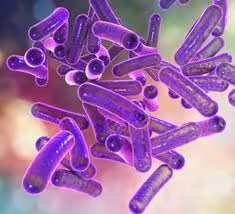
Brucella is a genus of Gram-negative, facultative intracellular coccobacilli.
-
Brucella species are the causative agents of brucellosis, also known as undulant fever, Malta fever, or Mediterranean fever.
-
Brucellosis is a major zoonotic disease, transmitted from animals to humans.
-
Humans acquire infection through:
-
Consumption of unpasteurized milk and dairy products
-
Direct contact with infected animals or animal products
-
Inhalation of infectious aerosols (laboratory exposure)
-
-
Common pathogenic species include:
-
Brucella melitensis
-
Brucella abortus
-
Brucella suis
-
Brucella canis
-
-
Brucella organisms have the ability to survive and multiply within macrophages, contributing to chronic infection.
-
The disease affects multiple systems, particularly:
-
Musculoskeletal
-
Reticuloendothelial
-
Genitourinary
-
Nervous system
-
-
Laboratory diagnosis relies on:
-
Culture
-
Serological tests
-
Molecular methods
-
-
Brucellosis is an important occupational hazard for veterinarians, farmers, abattoir workers, and laboratory personnel.
-
Control strategies focus on animal vaccination, food safety, surveillance, and public health education.
General Character
Genus: Brucella
Family
-
Brucellaceae
Species and Primary Hosts
-
Brucella abortus
-
Primarily affects cattle
-
Causes abortion in animals and brucellosis in humans
-
-
Brucella melitensis ⭐
-
Primarily affects goats and sheep
-
Most virulent species for humans
-
Common cause of severe human brucellosis
-
-
Brucella suis
-
Primarily affects pigs
-
Associated with chronic and suppurative infections in humans
-
-
Brucella canis
-
Affects dogs
-
Causes relatively milder disease in humans
-
Morphology and Staining Characteristics
Gram Staining
-
Gram-negative bacteria
-
Appear pink due to:
-
Thin peptidoglycan layer
-
Presence of outer membrane with LPS
-
Shape
-
Small coccobacilli
-
Short, plump rod-shaped organisms
Arrangement
-
Occur:
-
Singly
-
In small clusters
-
-
Do not form chains
Oxygen Requirements
-
Obligate aerobes
-
Some strains (especially B. abortus) require 5–10% CO₂ for primary isolation
Key concept:
-
Brucella species are facultative intracellular organisms,
NOT facultative anaerobes
Morphology
1. Size
-
Very small bacteria
-
Measure approximately 0.5–0.7 µm × 0.6–1.5 µm
2. Shape
-
Coccobacilli
-
Short, plump rod-shaped organisms
-
Appear intermediate between cocci and bacilli
3. Gram Reaction
-
Gram-negative
-
Appear pink on Gram staining due to:
-
Thin peptidoglycan layer
-
Presence of outer membrane with LPS
-
-
Often poorly stained with routine Gram stain
4. Arrangement
-
Occur:
-
Singly
-
Occasionally in small clusters
-
-
Do not form chains or palisades
5. Motility
-
Non-motile
-
Lack flagella
6. Capsule
-
Non-capsulated
-
No true polysaccharide capsule
7. Spores
-
Non-sporing
8. Pleomorphism
-
Minimal pleomorphism
-
Fairly uniform morphology
9. Special Staining Characteristics
-
Weakly acid-fast
-
Demonstrated by:
-
Modified Ziehl–Neelsen stain (1% sulfuric acid)
-
-
Stamp’s modification:
-
Organisms stain red against a blue background
-
Commonly used in veterinary microbiology
-
Cultural Characteristics
Growth Requirements
-
Fastidious, slow-growing organisms
-
Obligate aerobes
-
Optimal temperature: 35–37 °C
-
Optimal pH: 6.6–7.4
-
Some strains (especially B. abortus) require 5–10% CO₂ for primary isolation
-
Visible growth usually appears after 3–7 days, may take up to 2–3 weeks
Culture Media Used
A. Blood Agar
-
Enriched medium
-
Supports growth of most Brucella species
-
Colonies appear after 48–72 hours or later
B. Chocolate Agar
-
Better recovery than blood agar
-
Commonly used for routine isolation
C. Brucella Agar (Selective Medium)
-
Enriched with:
-
Blood or serum
-
Vitamins
-
-
Selective agents:
-
Polymyxin B
-
Bacitracin
-
Nystatin
-
Vancomycin
-
-
Used for specimens with mixed flora
D. Castaneda Biphasic Medium ⭐
-
Contains:
-
Solid agar phase + liquid broth phase
-
-
Medium of choice for blood culture
-
Minimizes risk of laboratory contamination and aerosol exposure
Colony Morphology
On Blood / Chocolate Agar
-
Small (1–2 mm), round, smooth, convex colonies
-
Translucent, glistening
-
Non-hemolytic
-
“Honey-drop / dew-drop” appearance
Colony Types (Antigenic Phases)
| Colony Type | Species | Characteristics |
|---|---|---|
| Smooth (S) | B. abortus, B. melitensis, B. suis | Smooth LPS, virulent |
| Rough (R) | B. canis | Rough LPS, less virulent |
Growth on Other Media
-
MacConkey agar:
-
Usually no growth
-
If growth occurs → non-lactose fermenting colonies
-
-
Low nutrient media: Poor or no growth
Biochemical Reactions
A. Oxidase Test
-
Positive in all Brucella species
B. Catalase Test
-
Positive in all species
-
Helps survival within macrophages by neutralizing hydrogen peroxide
C. Urease Test
-
Strongly positive
-
Rapid urease activity (within minutes to a few hours)
-
One of the most characteristic features of Brucella
D. Nitrate Reduction Test
-
Positive in most Brucella species
-
Helps in differentiation from other Gram-negative coccobacilli
E. Indole Test
-
Negative
F. Citrate Utilization
-
Negative
G. Hydrogen Sulfide (H₂S) Production
| Species | H₂S Production |
|---|---|
| B. abortus | Positive |
| B. suis | Positive |
| B. melitensis | Negative |
| B. canis | Negative |
Pathogenicity
Source of Infection
-
Infected animals:
-
Cattle (B. abortus)
-
Goats & sheep (B. melitensis)
-
Pigs (B. suis)
-
Dogs (B. canis)
-
-
Animal products:
-
Unpasteurized milk, cheese
-
Meat, placenta, aborted fetuses
-
Mode of Transmission
-
Ingestion: Unpasteurized dairy products (most common)
-
Direct contact: Through skin abrasions or mucous membranes
-
Inhalation: Aerosols (laboratory-acquired infection)
-
Rarely: Vertical transmission, blood transfusion
Portal of Entry
-
Gastrointestinal tract
-
Respiratory tract
-
Skin and conjunctiva
Virulence Factors
(Brucella lacks classic exotoxins)
A. Intracellular Survival Mechanisms
-
Smooth LPS:
-
Poorly endotoxic
-
Inhibits phagolysosome fusion
-
-
Type IV secretion system (VirB)
-
Enables intracellular replication
-
-
Superoxide dismutase & catalase
-
Protect against oxidative killing
-
-
Urease
-
Aids survival in acidic environments
-
Pathogenesis
-
Entry into the host via ingestion, inhalation, or contact
-
Phagocytosis by macrophages and dendritic cells
-
Survival and multiplication within phagosomes
-
Spread via lymphatics and bloodstream
-
Localization in reticuloendothelial organs:
-
Liver
-
Spleen
-
Bone marrow
-
Lymph nodes
-
-
Formation of granulomas
-
Persistence leads to chronic infection
Host Immune Response
-
Cell-mediated immunity is crucial
-
Th1 response (IFN-γ) activates macrophages
-
Antibodies:
-
Useful for diagnosis
-
Limited role in protection
-
Laboratory Diagnosis
Specimen Collection
A. Common Specimens
-
Blood (most important)
-
Bone marrow (highest yield)
-
CSF (neurobrucellosis)
-
Synovial fluid
-
Tissue biopsy (lymph node, liver)
B. Safety Note
-
Highly infectious organism
-
All specimens handled with BSL-3 precautions
Direct Microscopy
-
Gram stain:
-
Small Gram-negative coccobacilli
-
Low sensitivity
-
-
Not reliable for routine diagnosis
Culture Methods
A. Blood Culture
-
Castaneda biphasic medium – medium of choice
-
Incubation:
-
35–37 °C
-
Aerobic
-
With 5–10% CO₂ (especially B. abortus)
-
-
Duration:
-
Up to 4–6 weeks
-
-
Subcultures done weekly
B. Bone Marrow Culture
-
Most sensitive culture method
-
Useful in:
-
Chronic cases
-
Prior antibiotic therapy
-
Automated Blood Culture Systems
-
BACTEC / BacT-ALERT
-
Faster detection (within 5–7 days)
-
Improved sensitivity and safety
Identification of Isolates
-
Colony morphology on blood/chocolate agar
-
Biochemical tests:
-
Oxidase positive
-
Catalase positive
-
Rapid urease positive
-
-
H₂S production and dye sensitivity (reference labs)
Serological Tests
A. Standard Agglutination Test
-
Detects anti-Brucella antibodies
-
Diagnostic titer:
-
≥1:160 (single sample)
-
Fourfold rise in paired sera
-
-
Limitation:
-
Cannot differentiate acute vs chronic
-
Prozone phenomenon
-
B. Rose Bengal Plate Test (RBPT)
-
Rapid screening test
-
High sensitivity
-
Used for:
-
Mass screening
-
Field surveys
-
C. 2-Mercaptoethanol (2-ME) Test
-
Detects IgG antibodies
-
Helps distinguish:
-
Active vs chronic infection
-
Past exposure
-
D. ELISA
-
Detects IgM, IgG, IgA
-
High sensitivity and specificity
-
Useful in:
-
Early diagnosis
-
Chronic and complicated cases
-
Molecular Methods
PCR
-
Detects Brucella DNA
-
Highly sensitive and specific
-
Useful in:
-
Early disease
-
Relapse
-
Culture-negative cases
-
Hematological Findings
-
Anemia
-
Leukopenia or leukocytosis
-
Raised ESR
-
Mild thrombocytopenia
Antibiotic Resistance
Natural Susceptibility Pattern
-
Generally susceptible to:
-
Tetracyclines (Doxycycline)
-
Rifampicin
-
Aminoglycosides (Streptomycin, Gentamicin)
-
Fluoroquinolones
-
TMP–SMX
-
Intrinsic Resistance
-
Brucella species are intrinsically resistant to:
-
β-lactam antibiotics (Penicillins, Cephalosporins)
-
Macrolides
-
-
Reasons:
-
Poor intracellular penetration
-
Low affinity for penicillin-binding proteins
-
β-lactamase production (low-level)
-
Acquired Resistance
-
True acquired resistance is uncommon
-
Occurs mainly due to:
-
Inadequate therapy
-
Poor compliance
-
Monotherapy
-
-
Reported resistance:
-
Rifampicin resistance (mutations in rpoB)
-
Fluoroquinolone resistance (rare)
-
Recommended Combination Therapy (WHO)
| Clinical Situation | Regimen |
|---|---|
| Uncomplicated brucellosis | Doxycycline + Rifampicin (6 weeks) |
| Severe disease | Doxycycline + Streptomycin |
| Neurobrucellosis | Doxycycline + Rifampicin + TMP-SMX |
| Pregnancy / Children | Rifampicin + TMP-SMX |
Antibiotic Susceptibility Testing
-
Not routinely performed
-
Done in:
-
Treatment failure
-
Relapse
-
Epidemiological studies
-
-
Methods:
-
MIC determination
-
Molecular detection of resistance genes
-
Prevention
Control in Animals
A. Animal Vaccination
- Live attenuated vaccines used in animals:
- B. abortus → Strain S19 and RB51
- B. melitensis → Rev-1
- Vaccination reduces:
- Animal disease
- Human transmission
B. Test and Slaughter Policy
- Serological screening of livestock
- Elimination of infected animals
- Effective in non-endemic regions
Food Safety Measures
- Pasteurization of milk
- Avoid consumption of:
- Raw milk
- Unpasteurized cheese and dairy products
- Proper cooking of meat
Occupational Protection
High-Risk Groups
- Farmers
- Veterinarians
- Abattoir workers
- Laboratory personnel
Preventive Measures
- Use of:
- Gloves
- Masks
- Protective clothing
- Proper handling and disposal of animal products
- Education and training
Laboratory Safety
- Brucella is a common laboratory-acquired infection
- Requires:
- Biosafety Level-3 (BSL-3) practices
- Avoid aerosol generation
- Use biosafety cabinets
Human Vaccination
- ❌ No effective human vaccine available
- Past trials discontinued due to:
- Toxicity
- Poor efficacy
Chemoprophylaxis
- Not routinely recommended
- May be considered after:
- High-risk laboratory exposure
- Drugs used:
- Doxycycline + Rifampicin (short course)
Surveillance and Public Health Measures
- Notification of cases
- Monitoring of animal and human disease
- Control of animal movement
- Health education in endemic areas
- Live attenuated vaccines used in animals:
- B. abortus → Strain S19 and RB51
- B. melitensis → Rev-1
- Vaccination reduces:
- Animal disease
- Human transmission
MCQs
1. Brucella species belong to which family?
A. Enterobacteriaceae
B. Brucellaceae
C. Pasteurellaceae
D. Neisseriaceae
✅ Answer: B
2. Morphology of Brucella is best described as:
A. Gram-positive bacilli
B. Gram-negative cocci
C. Gram-negative coccobacilli
D. Acid-fast bacilli
✅ Answer: C
3. Most virulent Brucella species for humans is:
A. B. abortus
B. B. suis
C. B. canis
D. B. melitensis
✅ Answer: D
4. Brucella organisms are:
A. Obligate intracellular anaerobes
B. Facultative intracellular aerobes
C. Facultative anaerobes
D. Obligate anaerobes
✅ Answer: B
5. Brucella species are best described as:
A. Highly invasive extracellular bacteria
B. Toxin-producing pathogens
C. Facultative intracellular pathogens
D. Obligate intracellular pathogens
✅ Answer: C
6. Most common mode of transmission of brucellosis is:
A. Vector borne
B. Inhalation
C. Direct contact only
D. Ingestion of unpasteurized dairy products
✅ Answer: D
7. Brucella is weakly acid-fast due to:
A. Mycolic acid
B. Lipoarabinomannan
C. Cell wall lipid content
D. Capsule
✅ Answer: C
8. Best specimen for diagnosis of brucellosis is:
A. Urine
B. Blood
C. Throat swab
D. Stool
✅ Answer: B
9. Highest yield culture specimen in brucellosis is:
A. Blood
B. CSF
C. Bone marrow
D. Synovial fluid
✅ Answer: C
10. Culture medium of choice for blood culture in brucellosis is:
A. MacConkey agar
B. Blood agar
C. Lowenstein-Jensen medium
D. Castaneda biphasic medium
✅ Answer: D
11. Brucella species require which condition for optimal growth?
A. Anaerobic
B. Microaerophilic
C. Aerobic
D. Alkaline
✅ Answer: C
12. Which Brucella species requires CO₂ for primary isolation?
A. B. melitensis
B. B. abortus
C. B. suis
D. B. canis
✅ Answer: B
13. Brucella colonies on blood agar are:
A. Large, hemolytic
B. Mucoid and pigmented
C. Small, smooth, non-hemolytic
D. Dry and wrinkled
✅ Answer: C
14. Most characteristic biochemical test for Brucella is:
A. Oxidase negativity
B. Slow urease reaction
C. Rapid urease positivity
D. Sugar fermentation
✅ Answer: C
15. Brucella species are oxidase:
A. Negative
B. Weakly positive
C. Variable
D. Positive
✅ Answer: D
16. H₂S production is seen in:
A. B. melitensis
B. B. canis
C. B. abortus
D. All species
✅ Answer: C
17. Brucella does NOT ferment:
A. Glucose
B. Lactose
C. Sucrose
D. All of the above
✅ Answer: D
18. Main virulence factor of Brucella is:
A. Exotoxin
B. Capsule
C. Intracellular survival ability
D. Hemolysin
✅ Answer: C
19. Brucella survives intracellularly by inhibiting:
A. Phagocytosis
B. Complement activation
C. Phagolysosome fusion
D. Antibody production
✅ Answer: C
20. Type of immunity important in brucellosis is:
A. Humoral immunity
B. Complement mediated
C. Cell-mediated immunity
D. Innate immunity only
✅ Answer: C
21. Characteristic fever pattern in brucellosis is:
A. Continuous fever
B. Step-ladder fever
C. Undulating fever
D. Relapsing fever
✅ Answer: C
22. Most common system involved in brucellosis is:
A. Respiratory
B. Musculoskeletal
C. Gastrointestinal
D. Skin
✅ Answer: B
23. Most common cause of death in brucellosis is:
A. Neurobrucellosis
B. Hepatitis
C. Endocarditis
D. Septic shock
✅ Answer: C
24. Screening test for brucellosis is:
A. ELISA
B. PCR
C. Rose Bengal test
D. SAT
✅ Answer: C
25. Diagnostic titer in Standard Agglutination Test is:
A. ≥1:40
B. ≥1:80
C. ≥1:160
D. ≥1:320
✅ Answer: C
26. 2-Mercaptoethanol test detects mainly:
A. IgM
B. IgA
C. IgE
D. IgG
✅ Answer: D
27. Best test for chronic brucellosis is:
A. Blood culture
B. Rose Bengal test
C. ELISA
D. Weil-Felix test
✅ Answer: C
28. Gold standard for diagnosis of brucellosis is:
A. Serology
B. Culture
C. PCR
D. ELISA
✅ Answer: B
29. Brucella is a common cause of:
A. Hospital-acquired infection
B. Laboratory-acquired infection
C. Vector-borne disease
D. Nosocomial pneumonia
✅ Answer: B
30. Biosafety level required for Brucella handling is:
A. BSL-1
B. BSL-2
C. BSL-3
D. BSL-4
✅ Answer: C
31. Drug of choice for brucellosis is:
A. Penicillin
B. Doxycycline
C. Ciprofloxacin
D. Azithromycin
✅ Answer: B
32. Recommended treatment for uncomplicated brucellosis is:
A. Doxycycline alone
B. Rifampicin alone
C. Doxycycline + Rifampicin
D. TMP-SMX alone
✅ Answer: C
33. Duration of treatment in brucellosis is usually:
A. 1 week
B. 2 weeks
C. 3 weeks
D. 6 weeks
✅ Answer: D
34. Brucella shows intrinsic resistance to:
A. Tetracyclines
B. Rifampicin
C. Aminoglycosides
D. β-lactam antibiotics
✅ Answer: D
35. Relapse in brucellosis occurs due to:
A. Toxin production
B. Antigenic variation
C. Intracellular persistence
D. Spore formation
✅ Answer: C
36. Human vaccine against brucellosis is:
A. Available
B. Under trial
C. Live attenuated
D. Not available
✅ Answer: D
37. Animal vaccine used against B. abortus is:
A. Rev-1
B. RB51
C. BCG
D. S19 only
✅ Answer: B
38. Vaccine used against B. melitensis is:
A. S19
B. RB51
C. Rev-1
D. BCG
✅ Answer: C
39. Most effective preventive measure for brucellosis is:
A. Antibiotic prophylaxis
B. Human vaccination
C. Animal vaccination
D. Isolation of patients
✅ Answer: C
40. Pasteurization prevents brucellosis by:
A. Killing spores
B. Killing vegetative bacteria
C. Neutralizing toxins
D. Preventing fermentation
✅ Answer: B
41. Brucella LPS is best described as:
A. Highly endotoxic
B. Weakly endotoxic
C. Neurotoxic
D. Cytolytic
✅ Answer: B
42. Brucella canis shows which colony type?
A. Smooth
B. Mucoid
C. Rough
D. Hemolytic
✅ Answer: C
43. Brucella infection mainly involves which system?
A. Reticuloendothelial system
B. Respiratory system
C. Gastrointestinal tract
D. Skin
✅ Answer: A
44. Brucella species are non-motile due to absence of:
A. Pili
B. Capsule
C. Flagella
D. Fimbriae
✅ Answer: C
45. Which test differentiates IgM from IgG antibodies?
A. Rose Bengal test
B. SAT
C. 2-ME test
D. PCR
✅ Answer: C
46. Most common occupational group affected by brucellosis is:
A. Teachers
B. Healthcare workers
C. Veterinarians
D. Office workers
✅ Answer: C
47. Brucellosis is also known as:
A. Enteric fever
B. Malta fever
C. Dengue fever
D. Q fever
✅ Answer: B
48. Brucella species are killed by:
A. Cold storage
B. Pasteurization
C. Salting
D. Freezing
✅ Answer: B
49. Reason for prolonged therapy in brucellosis is:
A. Spore formation
B. Toxin production
C. Intracellular survival
D. Capsule formation
✅ Answer: C
50. Humans act as which type of host in brucellosis?
A. Definitive host
B. Intermediate host
C. Reservoir host
D. Dead-end host
✅ Answer: D