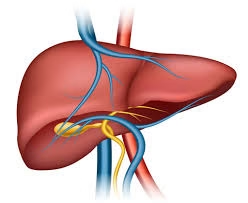
Introduction The liver is the largest internal organ and a vital gland in the human body. It performs over 500 essential functions, including bile production, metabolism, detoxification, and nutrient storage. Read More ……..
Simplifying Allied Health Learning.
Introduction The liver is the largest internal organ and a vital gland in the human body. It performs over 500 essential functions, including bile production, metabolism, detoxification, and nutrient storage. Read More ……..
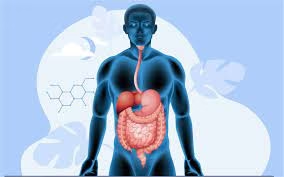
Introduction The alimentary system, also known as the digestive system, is responsible for the breakdown of food, absorption of nutrients, and elimination of waste. It consists of a long, muscular Read More ……..
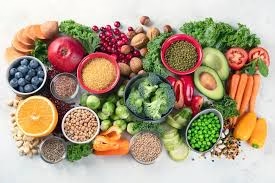
Introduction Nutrition is taking in food and converting it into energy and other vital nutrients required for life. Provide the necessary energy and biomolecules for carrying out various body functions. Read More ……..
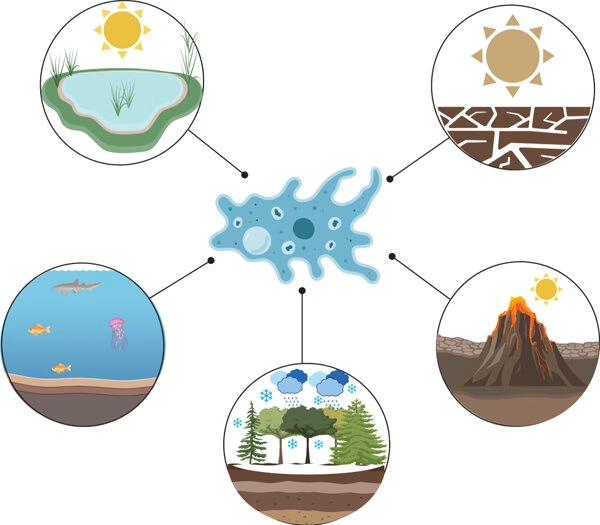
Introduction Free-living amoebae (FLA) are protozoan parasites that thrive independently in natural environments such as soil, freshwater, air, and dust. These amoebae can become opportunistic human pathogens, leading to severe Read More ……..

Introduction Rheumatology is a branch of medicine that deals with autoimmune and inflammatory diseases affecting the joints, muscles, bones, and connective tissues. These diseases are often systemic and can impact Read More ……..