Introduction The ABO blood group system is the most important classification used for blood transfusions, categorizing human blood into four main types: A, B, AB, and O. This classification is Read More ……..
Simplifying Allied Health Learning.
Introduction The ABO blood group system is the most important classification used for blood transfusions, categorizing human blood into four main types: A, B, AB, and O. This classification is Read More ……..
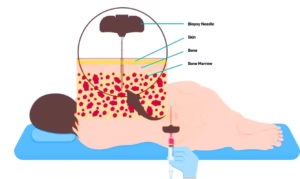
Introduction The bone marrow is the central organ of blood formation (hematopoiesis). It produces red blood cells (RBCs), white blood cells (WBCs), and platelets that circulate in the peripheral blood. Read More ……..

Introduction Acquired Autoimmune Hemolytic Anaemia (AIHA) is a rare blood disorder in which the immune system produces autoantibodies that attack and destroy red blood cells (RBCs), leading to premature hemolysis. Read More ……..
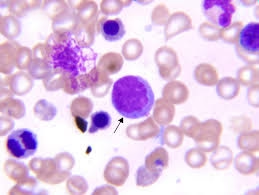
Introduction Bone marrow is the main factory of blood cells. It produces red cells, white cells, and platelets. Many blood diseases start in the marrow, so studying marrow samples is Read More ……..
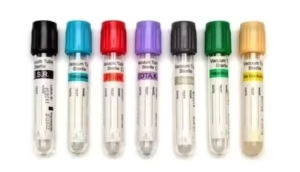
Introduction Anticoagulants play a crucial role in ensuring that blood samples remain in a fluid state for testing, storage, and transfusion. Different anticoagulants are used depending on the test or Read More ……..