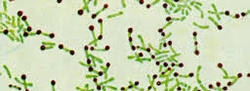
Principle Albert’s stain works based on the unique ability of Corynebacterium species to accumulate metachromatic granules in their cytoplasm. These granules are a result of the accumulation of polyphosphate. The Read More ……..
Simplifying Allied Health Learning.
Principle Albert’s stain works based on the unique ability of Corynebacterium species to accumulate metachromatic granules in their cytoplasm. These granules are a result of the accumulation of polyphosphate. The Read More ……..

Principle The principle of AFB staining hinges on the unique properties of mycobacterial cell walls. These bacteria contain a high concentration of mycolic acids, which make their cell walls impervious Read More ……..
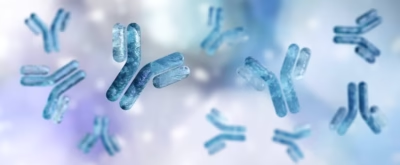
Introduction Antibodies, also known as immunoglobulins (Ig), are specialized glycoproteins produced by the immune system in response to foreign substances, called antigens. Their primary function is to identify and neutralize Read More ……..
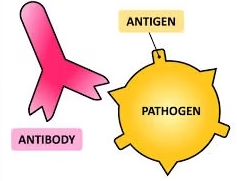
Antigens An antigen is any molecule or substance that can trigger an immune response in the body. Antigens can come from a variety of sources, including bacteria, viruses, fungi, and Read More ……..
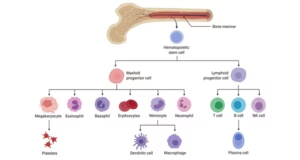
Introduction Formation of blood or hematopoiesis is the process by which all types of blood cells are produced and developed from a common precursor, the hematopoietic stem cell (HSC). It Read More ……..