
Introduction Dematiaceous fungi are a heterogeneous group of melanized fungi characterized by the presence of dark, pigmented hyphae and spores due to the production of melanin in their cell walls. Read More ……..
Simplifying Allied Health Learning.
Introduction Dematiaceous fungi are a heterogeneous group of melanized fungi characterized by the presence of dark, pigmented hyphae and spores due to the production of melanin in their cell walls. Read More ……..
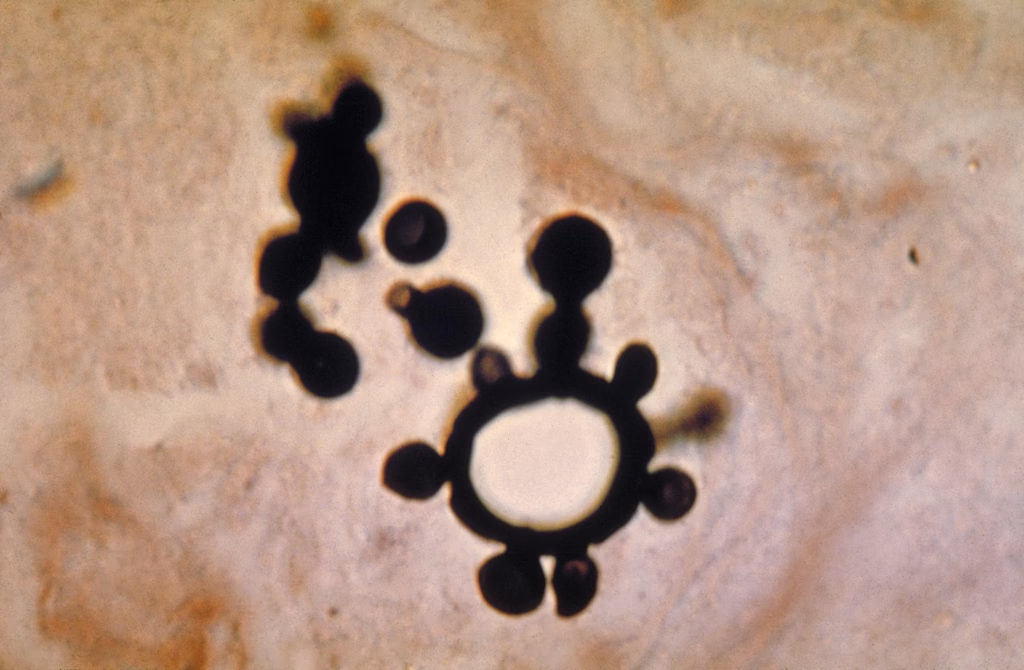
Introduction Paracoccidioides is a dimorphic fungus that causes paracoccidioidomycosis (PCM), a systemic fungal infection endemic to certain parts of Latin America. The disease primarily affects the lungs but can disseminate Read More ……..
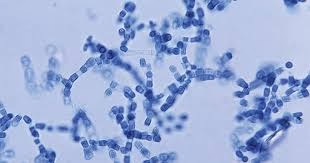
Introduction Coccidioides is a dimorphic fungi that causes coccidioidomycosis, also known as Valley Fever. The disease primarily affects the lungs but can disseminate to other organs in severe cases. There Read More ……..
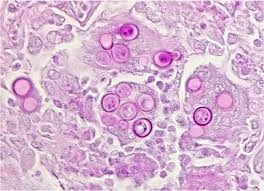
Introduction Blastomyces is a genus of dimorphic fungi that causes blastomycosis, a systemic fungal infection. The primary species causing human disease include: Blastomyces dermatitidis Blastomyces gilchristii Blastomyces helicus (less common, Read More ……..
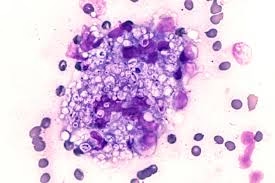
Introduction Histoplasmosis is a systemic fungal infection caused by Histoplasma capsulatum, a dimorphic fungus that can exist as a mold in the environment and as a yeast in human tissues. Read More ……..