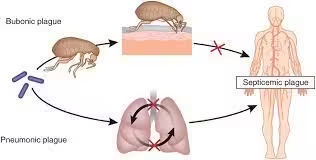
Introduction Plague is a serious infectious disease caused by Yersinia pestis, which belongs to the Enterobacteriaceae family. It primarily affects rodents, and humans can contract it through fleas, direct contact Read More ……..
Simplifying Allied Health Learning.
Introduction Plague is a serious infectious disease caused by Yersinia pestis, which belongs to the Enterobacteriaceae family. It primarily affects rodents, and humans can contract it through fleas, direct contact Read More ……..
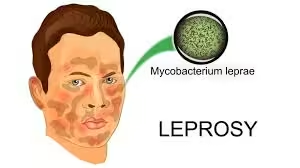
Introduction Leprosy, or Hansen’s disease, is a chronic infectious disease primarily caused by Mycobacterium leprae. This intracellular bacterium primarily affects the skin, peripheral nerves, mucosal surfaces, and eyes, leading to Read More ……..
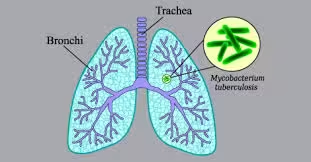
Introduction Tuberculosis (TB) remains a significant global health issue, affecting millions of individuals each year. The causative agent, Mycobacterium tuberculosis, is an aerobic bacterium that primarily targets the lungs but Read More ……..
Introduction Urinary tract infections (UTIs) are common infections that can affect any part of the urinary system, including the bladder (cystitis) and kidneys (pyelonephritis). UTIs can be caused by various Read More ……..

Assessing bleeding disorders involves various laboratory tests to evaluate the hemostatic process. These tests can help determine the nature of the bleeding disorder, whether it is related to platelets, coagulation Read More ……..