Introduction
-
Psychology is the scientific study of the mind and behavior. It examines how people think, feel, and act in different situations.
-
It helps us understand human thoughts, emotions, actions, and reactions to various life events and environments.
-
Psychology studies how individuals perceive, learn, remember, and make decisions in daily life.
-
In the health care field, especially for paramedic and allied health professionals, psychology plays an important role in understanding patient behavior.
-
Paramedic health care workers often deal with patients who may be sick, injured, anxious, stressed, or emotionally disturbed.
-
Knowledge of psychology helps health workers communicate effectively and provide compassionate patient care.
-
Psychology also studies abnormal behavior and mental disorders, helping health professionals recognize emotional and psychological problems in patients.
-
It explains how stress, illness, fear, and emotional reactions influence a patient’s health and recovery.
-
Psychological understanding improves teamwork, communication, and relationships among health care professionals and patients.
-
This topic includes the scope of psychology, different branches of psychology, the importance of psychology for paramedic health care workers, the relationship between brain and behavior, and the role of psychological tests.
Meaning of Psychology
Psychology comes from two Greek words:
-
Psyche – meaning mind or soul
-
Logos – meaning study or science
Therefore, psychology literally means the study of the mind.
In modern science, psychology is defined as:
“The scientific study of behavior and mental processes.”
Behavior includes actions that can be observed such as talking, walking, laughing, or crying. Mental processes include thinking, memory, emotions, perception, and decision making.
Psychology helps us understand:
-
How people learn
-
Why people behave differently
-
How emotions affect health
-
How stress affects the body
-
How mental disorders develop
Scope of Psychology
The scope of psychology is very wide. It covers many areas of human life and behavior. Psychology is applied in medicine, education, industry, counseling, and social services.
The major areas included in the scope of psychology are:
1. Study of Human Behavior
Psychology studies how people behave in different situations. Behavior may be normal or abnormal and may be influenced by biological, social, and environmental factors.
2. Study of Mental Processes
Mental processes include thinking, perception, intelligence, emotions, memory, learning, and problem solving.
3. Study of Individual Differences
Every person is unique. Psychology studies differences in personality, intelligence, attitudes, and emotional responses among individuals.
4. Study of Development
Psychology studies human development from infancy to old age, including physical, emotional, and cognitive development.
5. Study of Mental Health
Psychology helps identify mental disorders such as depression, anxiety, and stress-related conditions. It also helps in treatment and counseling.
6. Application in Health Care
Psychology is used in medical and paramedical fields to understand patient behavior, manage stress, and improve doctor–patient relationships.
7. Study of Social Behavior
Psychology also studies how people behave in groups and society, including attitudes, leadership, communication, and social interaction.
Thus, the scope of psychology includes both theoretical knowledge and practical applications in daily life and professional fields.
Branches of Psychology
Psychology is divided into several branches based on different areas of study.
1. General Psychology
General psychology studies basic psychological processes such as perception, memory, learning, motivation, and emotion. It provides the foundation for other branches of psychology.
2. Clinical Psychology
Clinical psychology focuses on the diagnosis and treatment of mental disorders such as depression, anxiety, schizophrenia, and personality disorders.
Clinical psychologists use psychological tests and therapy methods to help patients.
3. Developmental Psychology
Developmental psychology studies human growth and development throughout life. It examines how physical, emotional, and cognitive abilities change from childhood to old age.
4. Educational Psychology
Educational psychology studies how people learn and how teaching methods can improve learning outcomes.
It helps teachers understand students’ learning abilities and difficulties.
5. Social Psychology
Social psychology studies how individuals behave in social situations. It focuses on topics such as attitudes, social influence, group behavior, and interpersonal relationships.
6. Industrial or Organizational Psychology
This branch studies human behavior in the workplace. It helps improve employee motivation, productivity, and job satisfaction.
7. Health Psychology
Health psychology focuses on the relationship between psychological factors and physical health. It studies how stress, emotions, and lifestyle affect health and disease.
8. Neuropsychology
Neuropsychology studies the relationship between the brain and behavior. It helps understand how brain damage or neurological disorders affect thinking, emotions, and actions.
9. Counseling Psychology
Counseling psychology helps individuals deal with emotional problems, stress, relationship issues, and life challenges.
Significance of Psychology in Paramedic Health Care Workers
Paramedic health care workers include nurses, laboratory technicians, radiology technicians, physiotherapists, emergency medical technicians, and other allied health professionals.
Their work involves direct patient contact. Therefore, understanding psychology is very important.
1. Better Communication with Patients
Patients may feel anxious, frightened, or confused during illness. Psychological knowledge helps paramedics communicate clearly and calmly with patients.
2. Understanding Patient Emotions
Illness often causes emotional reactions such as fear, anger, depression, or frustration. Psychology helps health workers understand and manage these emotions.
3. Improving Patient Cooperation
Patients cooperate better when they feel respected and understood. Psychological skills help paramedics build trust with patients.
4. Managing Stress in Health Workers
Health care workers often face stressful situations such as emergencies, critical patients, and long working hours. Psychology helps them manage stress and maintain mental health.
5. Enhancing Teamwork
Hospitals require teamwork between doctors, nurses, and paramedical staff. Psychological understanding improves communication and cooperation among team members.
6. Helping in Patient Counselling
Paramedic workers sometimes need to explain medical procedures, laboratory tests, or treatment plans. Psychological knowledge helps them counsel patients effectively.
7. Handling Difficult Patients
Some patients may become aggressive, anxious, or uncooperative. Psychology provides techniques to handle such situations calmly.
8. Supporting Mental Health of Patients
Many patients suffer from emotional distress along with physical illness. Paramedic workers can provide emotional support using basic psychological principles.
Brain and Behaviour
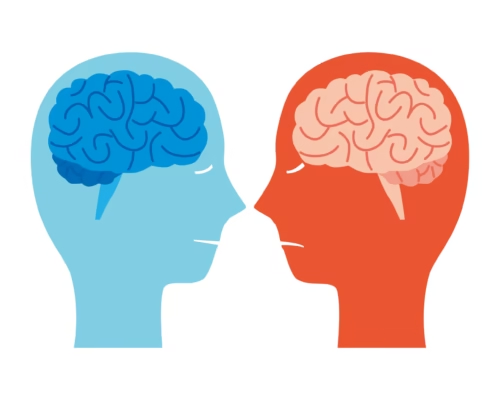
The brain is the most important organ controlling human behavior and mental functions. It is a complex organ that processes information, controls movements, and regulates emotions.
Psychology studies how the brain influences behavior, thoughts, and emotions.
Structure of the Brain
The brain has three major parts:
1. Cerebrum
The cerebrum is the largest part of the brain. It is responsible for:
-
Thinking
-
Memory
-
Learning
-
Decision making
-
Voluntary movements
-
Sensory perception
The cerebrum has two hemispheres: left hemisphere and right hemisphere.
2. Cerebellum
The cerebellum controls:
-
Balance
-
Coordination
-
Posture
-
Fine motor movements
3. Brainstem
The brainstem controls vital functions such as:
-
Breathing
-
Heart rate
-
Blood pressure
-
Reflex actions
Relationship Between Brain and Behaviour
The brain and behavior are closely connected. Changes in brain function can affect behavior and mental processes.
Examples include:
-
Brain injury may cause memory loss.
-
Damage to certain brain areas may affect speech.
-
Chemical imbalance in the brain can cause depression or anxiety.
Understanding brain-behavior relationships helps doctors and paramedics diagnose neurological and psychological disorders.
Psychological Tests
Psychological tests are scientific tools used to measure mental abilities, personality traits, emotions, and behavior.
These tests help psychologists and health professionals understand an individual’s mental functioning.
Characteristics of Psychological Tests
A good psychological test should have:
-
Reliability – It should produce consistent results.
-
Validity – It should measure what it is intended to measure.
-
Standardization – It should be administered and scored in a uniform manner.
-
Objectivity – The results should not depend on the examiner’s personal opinion.
Types of Psychological Tests
There are several types of psychological tests used in psychology.
1. Intelligence Tests
These tests measure intellectual abilities such as reasoning, problem solving, and learning capacity.
Examples include IQ tests.
2. Personality Tests
Personality tests assess traits such as introversion, extroversion, emotional stability, and behavior patterns.
These tests help understand an individual’s personality characteristics.
3. Aptitude Tests
Aptitude tests measure a person’s ability to learn specific skills.
They are often used for career guidance and job selection.
4. Achievement Tests
Achievement tests measure knowledge or skills gained through education or training.
Examples include academic examinations.
5. Neuropsychological Tests
These tests evaluate brain functioning, memory, attention, and cognitive abilities.
They are used in patients with brain injuries or neurological disorders.
Importance of Psychological Testing in Health Care
Psychological tests are useful in many health care settings.
1. Diagnosis of Mental Disorders
Psychological tests help identify conditions such as depression, anxiety, and cognitive impairment.
2. Assessment of Brain Function
Tests help detect memory problems, attention deficits, and brain damage.
3. Evaluation of Personality and Behavior
Personality assessments help understand behavioral patterns that may affect treatment.
4. Monitoring Treatment Progress
Psychological tests help evaluate whether therapy or treatment is effective.
5. Rehabilitation Planning
In patients with neurological damage, psychological testing helps plan rehabilitation programs.