
Introduction
-
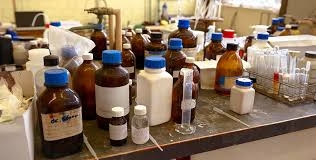
Storage of chemicals is an essential part of laboratory safety and management.
-
Proper chemical storage helps maintain the stability, purity, and safety of reagents.
-
It prevents accidents such as fire, explosion, contamination, and chemical reactions.
-
Chemicals vary in properties — some are flammable, corrosive, reactive, or toxic, so they require specific storage conditions.
-
Acids and bases should be stored separately to avoid harmful reactions.
-
Oxidizing agents must not be kept near organic solvents or flammable materials.
-
Flammable chemicals should be stored in fire-proof or flame-resistant cabinets.
-
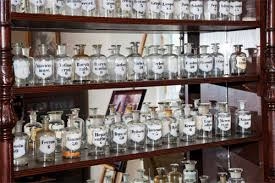
All chemical containers must be properly labeled with the name, concentration, hazard symbol, and date.
-
Use appropriate storage cabinets and ensure good ventilation in the storage area.
-
Maintain an updated inventory list of all chemicals present in the laboratory.
-
Control environmental factors like temperature, humidity, and light to prevent chemical degradation.
-
Regularly inspect chemical containers for leaks, corrosion, and expiration dates.
-
Store toxic or volatile chemicals in well-ventilated areas or fume hoods.
-
Segregate incompatible chemicals to minimize risk.
-
Safe and organized chemical storage ensures laboratory safety, accuracy, and reliability of experimental results.
Labelling and Documentation
- Clear Labelling: Every chemical container should be clearly labelled with:
- Chemical name
- Concentration (if applicable)
- Date of preparation or receipt
- Expiry date (if applicable)
- Hazard symbols (e.g., corrosive, flammable)
- Safety Data Sheets (SDS): Ensure that Safety Data Sheets are available for all chemicals and easily accessible.

General Storage Guidelines
-
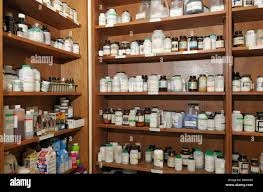
Store all chemicals according to their hazard class and compatibility (e.g., acids, bases, flammables, oxidizers, toxics).
-
Keep chemical containers tightly closed when not in use to prevent evaporation, spills, or contamination.
-
Ensure all containers are properly labeled with name, concentration, hazard symbols, and date of receipt or preparation.
-
Do not store chemicals alphabetically unless they are grouped by compatible classes — this prevents accidental mixing of incompatible substances.
-
Use suitable storage cabinets such as flammable, corrosive, or acid–base cabinets depending on the type of chemical.
-
Maintain a clean, organized, and well-ventilated storage area away from direct sunlight and heat sources.
-
Segregate incompatible chemicals, such as acids away from bases, oxidizers away from organics, and flammables away from corrosives.
-
Store flammable liquids in approved fire-resistant cabinets or explosion-proof refrigerators if cooling is required.
-
Keep corrosive chemicals (acids and alkalis) on lower shelves or in corrosion-resistant trays to contain leaks.
-
Avoid storing heavy containers or large bottles on high shelves to prevent breakage and spillage.
-
Label and date all prepared reagents and dispose of expired or degraded chemicals safely.
-
Use secondary containment trays to catch leaks or spills, especially under liquid containers.
-
Maintain an updated chemical inventory and perform periodic inspections of containers for leaks or damage.
-
Provide clear signage and emergency information near chemical storage areas (fire extinguishers, eyewash, first aid).
-
Allow only authorized personnel to access the chemical storage area and follow all safety protocols and PPE requirements.
Storage Conditions Based on Chemical Type
1. Acids
-
Store acids in a dedicated acid cabinet made of corrosion-resistant material.
-
Keep away from bases, cyanides, sulfides, and flammable substances.
-
Nitric acid should be stored separately from other acids, especially organic acids.
-
Use plastic trays or secondary containment to prevent leaks or corrosion.
-
Avoid metal shelves — acids can corrode metal surfaces.
2. Bases (Alkalis)
-
Store bases like NaOH, KOH, and ammonia separately from acids to prevent violent reactions.
-
Keep in plastic bottles (not glass) to prevent container weakening.
-
Store on lower shelves with secondary containment.
-
Avoid storing near flammable or oxidizing agents.
3. Flammable Liquids
-
Store in approved flammable-liquid cabinets or explosion-proof refrigerators if cooling is needed.
-
Keep away from heat, sparks, and open flames.
-
Do not store near oxidizing agents or acids.
-
Use tightly sealed containers to prevent vapor escape.
-
Limit the quantity stored in the laboratory to below permissible volume limits.
4. Oxidizing Agents
-
Store separately from organic materials, flammable substances, and reducing agents.
-
Keep in cool, dry, and well-ventilated areas.
-
Examples: Hydrogen peroxide, potassium permanganate, nitric acid.
-
Avoid contact with paper, wood, or cloth, as it can cause ignition.
5. Toxic and Poisonous Chemicals
-
Store in locked cabinets marked “TOXIC – HANDLE WITH CARE.”
-
Keep away from food, beverages, or clean glassware.
-
Use secondary containment and spill trays.
-
Handle under a fume hood if volatile or with strong odor.
-
Examples: Cyanides, arsenic compounds, phenol.
6. Reactive Chemicals
-
Store individually in tightly sealed containers.
-
Keep away from water, air, or light, depending on reactivity.
-
Examples: Sodium metal (store under mineral oil), phosphorus (store under water).
-
Label clearly as “Reactive – Handle with Caution.”
7. Corrosive Substances
-
Store in corrosion-resistant cabinets or trays.
-
Separate acids and bases in different compartments.
-
Avoid placing above eye level to prevent splashes during handling.
-
Examples: Sulfuric acid, hydrochloric acid, sodium hydroxide.
8. Compressed Gases
-
Cylinders must be stored upright and securely fastened with chains or straps.
-
Store in well-ventilated, dry areas away from heat sources.
-
Segregate flammable gases (e.g., hydrogen, acetylene) from oxidizing gases (e.g., oxygen).
-
Replace caps and labels immediately after use.
9. Light-Sensitive Chemicals
-
Store in amber or dark glass bottles to protect from light exposure.
-
Keep in a cool, dry, and dark cabinet.
-
Examples: Silver nitrate, ferric chloride, vitamin solutions.
10. Hygroscopic and Volatile Substances
-
Store in airtight containers to prevent moisture absorption.
-
Examples: Sodium hydroxide, anhydrous calcium chloride.
-
Avoid frequent opening and use desiccators for storage.
Storage for Hazardous Chemicals
Acids and Bases
- Corrosive-resistant Cabinets: Strong acids (e.g., HCl, H₂SO₄) and bases (e.g., NaOH) should be stored in corrosion-resistant cabinets.
- Secondary Containment: Store in trays or containers to prevent spills.
Flammable and Volatile Chemicals
- Flammable Storage Cabinets: Volatile organic solvents (e.g., ethanol, methanol, acetone) should be stored in flame-proof cabinets away from heat sources.
- Ventilation: Ensure proper ventilation to avoid fume buildup.
Toxic Chemicals
- Tightly Sealed: Toxic chemicals should be kept in tightly sealed containers to prevent inhalation or contamination.
- Special Handling: Follow specific safety procedures for highly toxic or carcinogenic chemicals.
Expiration and Inventory Management
-
Maintain an updated inventory register listing all chemicals with their name, grade, quantity, date of purchase, and expiry date.
-
Each chemical container should have a clearly visible label mentioning the date of receipt, date of opening, and expiry date.
-
Use the “First In, First Out (FIFO)” method — always use older stock before opening new containers.
-
Check expiry dates regularly, at least once every 3–6 months, especially for unstable or volatile chemicals.
-
Dispose of expired chemicals safely as per institutional or environmental safety guidelines — never mix or pour into sinks.
-
For light-sensitive or hygroscopic chemicals, monitor shelf life more frequently, as these degrade faster.
-
Maintain digital or manual logs for easy tracking and audit of reagent usage and expiry.
-
Store short-life chemicals (e.g., solutions, peroxides, buffers) in smaller aliquots to minimize waste.
-
Mark near-expiry reagents with a colored tag or sticker for quick identification.
-
Keep a centralized chemical inventory system shared among departments to avoid duplicate purchases.
-
Record batch numbers, supplier details, and storage location for traceability.
-
Conduct annual stock verification and remove degraded or unlabelled containers immediately.
-
Ensure responsible personnel are assigned for inventory updates and verification.
-
Maintain separate lists for toxic, flammable, corrosive, and reactive chemicals for safety inspection.
-
A well-maintained inventory and expiry management system ensures cost efficiency, laboratory safety, and data reliability.
Disposal of Chemicals
-
Follow institutional and environmental regulations for safe disposal.
-
Segregate chemical waste as organic, inorganic, corrosive, flammable, or toxic.
-
Never pour chemicals into sinks or drains.
-
Use properly labeled waste containers with hazard symbols.
-
Neutralize acids and bases (to pH 6–8) before disposal, if permitted.
-
Collect organic solvents separately for recycling or incineration.
-
Heavy metal waste (e.g., mercury, lead) must go to authorized disposal agencies.
-
Avoid mixing incompatible wastes in one container.
-
Wear PPE (gloves, goggles, lab coat) during waste handling.
-
Keep a waste disposal logbook for record and accountability.
MCQs
-
Proper chemical storage helps maintain:
A. Temperature only
B. Stability, purity, and safety
C. Color and odor
D. Solubility of reagents -
Acids and bases should be stored:
A. Together in one cabinet
B. Separately to avoid harmful reactions
C. With oxidizers
D. With organic solvents -
Flammable chemicals must be stored in:
A. Open shelves
B. Wooden racks
C. Fire-proof or flame-resistant cabinets
D. Plastic trays -
Oxidizing agents should not be stored near:
A. Glassware
B. Organic solvents and flammable materials
C. Acids
D. Bases -
All chemical containers must be labeled with:
A. Only name of chemical
B. Name, concentration, hazard symbol, and date
C. Supplier name only
D. None of the above -
The main purpose of good ventilation in storage areas is to:
A. Save electricity
B. Prevent gas and vapor accumulation
C. Control dust only
D. Dry glassware -
The best method to prevent chemical degradation is to control:
A. Color and size of bottle
B. Temperature, humidity, and light
C. Labeling
D. Type of gloves used -
Which of the following should be inspected regularly?
A. Pipettes
B. Beakers
C. Chemical containers for leaks or corrosion
D. Test tubes -
What document provides safety and hazard information about a chemical?
A. Label
B. SDS (Safety Data Sheet)
C. Stock register
D. Manual -
Flammable liquids should be stored:
A. Near heat sources
B. In explosion-proof cabinets
C. With acids
D. Inside fume hood -
Which of the following is a correct example of segregation?
A. Acids and bases together
B. Flammables and oxidizers together
C. Oxidizers away from organics
D. Cyanides near acids -
Nitric acid should be stored:
A. With organic acids
B. Separately from other acids
C. With bases
D. With solvents -
Toxic chemicals should be stored:
A. In a locked cabinet labeled “Toxic”
B. Near food
C. In open racks
D. On top shelves -
Sodium metal should be stored:
A. Under mineral oil
B. In water
C. With oxidizers
D. In refrigerator -
Light-sensitive chemicals like silver nitrate are stored in:
A. Transparent glass bottles
B. Amber-colored bottles in dark areas
C. Plastic jars
D. Metal boxes -
Compressed gas cylinders should be stored:
A. Horizontally
B. Upright and secured with chains
C. Near flames
D. Without caps -
The “First In, First Out (FIFO)” rule ensures:
A. Oldest stock used first
B. New stock used first
C. Random use of stock
D. Only monthly check -
Expired chemicals should be:
A. Mixed with other waste
B. Reused
C. Disposed of safely as per guidelines
D. Kept for later -
Near-expiry chemicals should be:
A. Ignored
B. Marked with colored tags
C. Stored with new stock
D. Diluted for reuse -
Which log is essential for safe disposal of chemicals?
A. Attendance log
B. Waste disposal logbook
C. Cleaning register
D. Glassware log -
Heavy metal wastes like mercury should be:
A. Poured down the sink
B. Sent to authorized waste agencies
C. Evaporated
D. Neutralized -
Acids and bases before disposal should be:
A. Heated
B. Neutralized to pH 6–8
C. Mixed together
D. Diluted with alcohol -
Chemical waste containers should be:
A. Without labels
B. Labeled with hazard symbols and contents
C. Filled completely
D. Kept open for ventilation -
During chemical waste handling, always wear:
A. Only gloves
B. Lab coat, gloves, and goggles (PPE)
C. Casual clothes
D. Mask only -
Safe and organized chemical storage ensures:
A. Faster evaporation
B. Accuracy, reliability, and laboratory safety
C. Shorter experiments
D. Reduced labeling work
Answer Key
-
B
-
B
-
C
-
B
-
B
-
B
-
B
-
C
-
B
-
B
-
C
-
B
-
A
-
A
-
B
-
B
-
A
-
C
-
B
-
B
-
B
-
B
-
B
-
B
-
B