Introduction
- The cell is the smallest living unit capable of carrying out all vital life processes.
- In anatomy and physiology, the study of cells is known as cytology.
- Every tissue, organ, and organ system in the human body is formed by the structural and functional organization of cells.
- Anatomy focuses on what the cell looks like, while physiology explains how the cell works.
- A clear understanding of cell organization is essential to understand normal body functions as well as disease mechanisms.
Levels of Organization in the Human Body
The human body is organized in a hierarchical manner:
Cell → Tissue → Organ → Organ system → Organism
-
Cells combine to form tissues
-
Tissues form organs
-
Organs work together as organ systems
-
All systems together form the human body
Any defect at the cellular level can affect the entire body.
Discovery and Cell Theory
-
Robert Hooke (1665): First observed cells in cork
-
Schleiden & Schwann: Proposed cell theory
-
Rudolf Virchow: “All cells arise from pre-existing cells”
Cell Theory States:
-
All living organisms are made of cells
-
Cell is the basic structural and functional unit of life
-
New cells arise from existing cells
Classification of Cells
1. Prokaryotic Cells
-
No true nucleus
-
No membrane-bound organelles
-
Genetic material is naked DNA
Example: Bacteria
2. Eukaryotic Cells
-
True nucleus present
-
Membrane-bound organelles present
Example: Human cells, plant cells
Human cells are eukaryotic and highly specialized
General Structure of a Typical Human Cell
A typical animal cell consists of three major components:
-
Cell membrane
-
Cytoplasm
-
Nucleus
Each component plays a critical role in maintaining cellular life.
Cell Membrane (Plasma Membrane)
Structure
-
Thin, elastic, semi-permeable membrane
-
Thickness ≈ 7–10 nm
-
Composed of:
-
Phospholipid bilayer
-
Proteins (integral and peripheral)
-
Cholesterol
-
Carbohydrates
-
Fluid Mosaic Model
-
Lipids provide fluidity
-
Proteins float like a mosaic
-
Cholesterol stabilizes the membrane
Functions of Cell Membrane
-
Protects internal contents of the cell
-
Maintains cell shape
-
Selective permeability
-
Cell recognition (glycoproteins)
-
Cell signaling (receptors)
Transport Across Cell Membrane
-
Passive transport: Diffusion, facilitated diffusion
-
Active transport: Requires ATP
-
Vesicular transport: Endocytosis, exocytosis
Physiology relevance:
Ion channels and receptors are essential for nerve impulse transmission and hormone action.
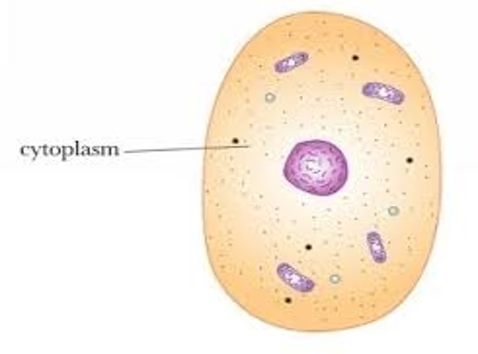
Cytoplasm
The cytoplasm is a semi-fluid matrix between the cell membrane and nucleus.
Components
-
Cytosol (intracellular fluid)
-
Cell organelles
-
Inclusions (glycogen, lipid droplets)
Functions
-
Site of metabolic reactions (glycolysis)
-
Transport of materials within the cell
-
Maintains internal environment
Cell Organelles: Structure and Function
Nucleus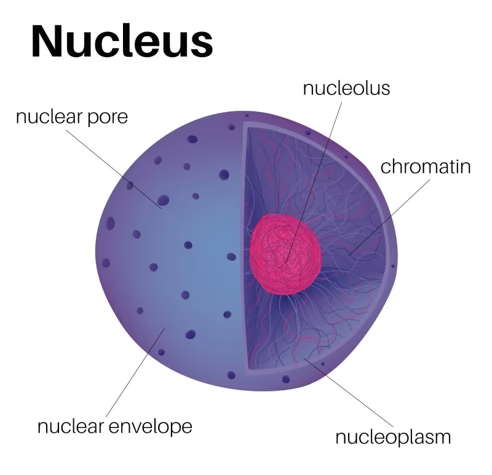
The control center of the cell.
Structure
-
Nuclear membrane (double layered)
-
Nuclear pores
-
Nucleoplasm
-
Nucleolus
-
Chromatin (DNA + proteins)
Functions
-
Stores genetic material
-
Controls protein synthesis
-
Regulates cell growth and division
Clinical correlation:
Abnormal nuclear structure is seen in cancer cells.
Mitochondria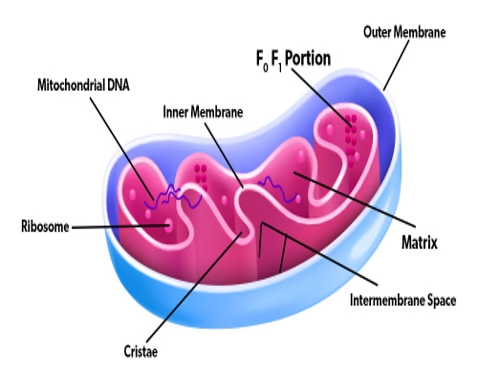
Structure
-
Double membrane
-
Outer membrane: smooth
-
Inner membrane: folded into cristae
-
Inner space: matrix
Functions
-
ATP production (oxidative phosphorylation)
-
Regulation of apoptosis
-
Heat production (brown fat)
Physiology note:
Mitochondria contain their own DNA → maternal inheritance
Endoplasmic Reticulum (ER)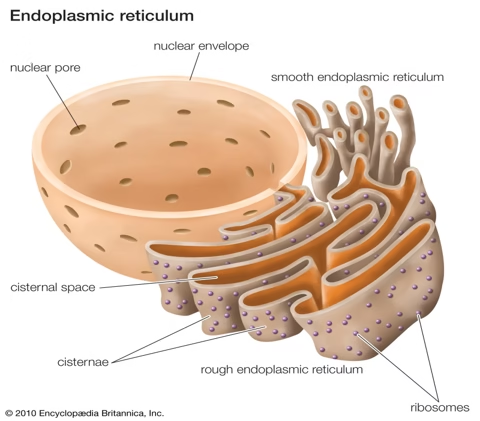
Rough ER (RER)
-
Ribosomes attached
Functions:
-
Protein synthesis
-
Transport of proteins to Golgi
Smooth ER (SER)
-
No ribosomes
Functions:
-
Lipid and steroid synthesis
-
Detoxification
-
Calcium storage (important in muscle contraction)
Ribosomes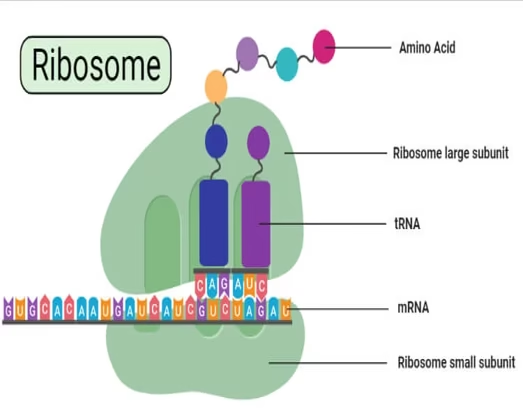
-
Non-membrane-bound organelles
-
Free or attached to RER
Function:
-
Protein synthesis
Golgi Apparatus
Structure
-
Flattened membrane sacs (cisternae)
Functions
-
Modifies proteins
-
Packages proteins into vesicles
-
Secretion of hormones and enzymes
Physiology relevance:
Defective Golgi function affects secretion pathways.
Lysosomes
Structure
-
Membrane-bound vesicles
-
Contain hydrolytic enzymes
Functions
-
Intracellular digestion
-
Removal of worn-out organelles
-
Autolysis (cell death)
Clinical importance:
Lysosomal enzyme deficiency → storage disorders
Peroxisomes
-
Contain oxidases and catalase
Functions:
-
Detoxification
-
Breakdown of hydrogen peroxide
-
Fatty acid oxidation
Cytoskeleton
Components
-
Microfilaments (actin)
-
Microtubules (tubulin)
-
Intermediate filaments
Functions
-
Maintains cell shape
-
Cell movement
-
Transport of organelles
Centrosome and Centrioles
-
Important during cell division
Functions:
-
Formation of spindle fibers
-
Separation of chromosomes
Physiological Functions of Cells
Cells perform essential life functions:
- Metabolism: All chemical reactions inside the cell (anabolism + catabolism).
- Respiration: Production of energy (ATP) in mitochondria.
- Nutrition & Absorption: Uptake of nutrients, oxygen, and water.
- Synthesis & Secretion: Formation and release of proteins, enzymes, hormones.
- Excretion: Removal of metabolic waste products.
- Growth: Increase in cell size and functional capacity.
- Reproduction: Cell division (mitosis for growth/repair, meiosis for gametes).
- Movement: Muscle contraction, ciliary movement, amoeboid movement.
- Irritability (Responsiveness): Ability to respond to stimuli.
- Conductivity: Transmission of electrical impulses (nerve, muscle cells).
- Communication: Cell signaling via hormones and neurotransmitters.
- Homeostasis: Maintenance of stable internal environment.
- Defense: Protection against pathogens (phagocytosis, immunity).
- Aging & Apoptosis: Programmed cell death for tissue balance.
Cell Specialization and Differentiation
Cells undergo differentiation to perform specific roles.
| Cell | Structural Adaptation | Function |
|---|---|---|
| Neuron | Long axon | Signal transmission |
| Muscle cell | Actin & myosin | Contraction |
| RBC | Biconcave, no nucleus | Oxygen transport |
| Epithelial cell | Tight junctions | Protection |
Clinical Significance of Cell Organization
-
Genetic mutations affect cellular function
-
Cancer = uncontrolled cell division
-
Metabolic diseases = enzyme defects
-
Neurodegeneration = mitochondrial dysfunction
Most diseases begin at the cellular level.
MCQs
1. The basic structural and functional unit of life is:
A. Tissue
B. Organ
C. Cell
D. System
2. The branch of science that studies cells is called:
A. Histology
B. Cytology
C. Physiology
D. Embryology
3. Who first discovered cells?
A. Leeuwenhoek
B. Schleiden
C. Schwann
D. Robert Hooke
4. Human cells are classified as:
A. Prokaryotic
B. Anaerobic
C. Eukaryotic
D. Unicellular
5. The plasma membrane is mainly composed of:
A. Protein bilayer
B. Carbohydrate bilayer
C. Phospholipid bilayer
D. Cholesterol bilayer
6. The model describing cell membrane structure is:
A. Unit membrane model
B. Sandwich model
C. Fluid mosaic model
D. Lamellar model
7. Which of the following is a function of the cell membrane?
A. Protein synthesis
B. Energy production
C. Selective permeability
D. DNA replication
8. The jelly-like substance inside the cell is called:
A. Nucleus
B. Cytoplasm
C. Nucleoplasm
D. Plasma
9. Which organelle is known as the “powerhouse of the cell”?
A. Golgi apparatus
B. Ribosome
C. Mitochondria
D. Lysosome
10. ATP is mainly produced in:
A. Cytoplasm
B. Nucleus
C. Golgi apparatus
D. Mitochondria
11. The inner folds of mitochondria are called:
A. Matrix
B. Cristae
C. Cisternae
D. Lamellae
12. Which organelle contains the genetic material?
A. Ribosome
B. Mitochondria
C. Golgi apparatus
D. Nucleus
13. The nucleolus is involved in:
A. Lipid synthesis
B. Ribosome formation
C. ATP production
D. Cell division
14. Rough endoplasmic reticulum is involved in:
A. Lipid synthesis
B. Detoxification
C. Protein synthesis
D. Steroid synthesis
15. Smooth endoplasmic reticulum is important for:
A. Protein synthesis
B. DNA synthesis
C. Lipid synthesis
D. Ribosome formation
16. Ribosomes are mainly concerned with:
A. Lipid synthesis
B. Protein synthesis
C. Energy production
D. Secretion
17. Which organelle modifies and packages proteins?
A. Lysosome
B. Golgi apparatus
C. Mitochondria
D. Ribosome
18. Lysosomes are rich in:
A. Oxidative enzymes
B. Digestive enzymes
C. Respiratory enzymes
D. Synthetic enzymes
19. Lysosomes are also called:
A. Powerhouse
B. Packaging unit
C. Suicide bags
D. Control center
20. Which organelle is involved in detoxification?
A. Rough ER
B. Smooth ER
C. Ribosome
D. Nucleus
21. Peroxisomes mainly contain:
A. Hydrolytic enzymes
B. Digestive enzymes
C. Oxidative enzymes
D. Glycolytic enzymes
22. Cytoskeleton helps in:
A. DNA synthesis
B. Energy production
C. Cell shape and movement
D. Protein packaging
23. Microtubules are made of:
A. Actin
B. Myosin
C. Tubulin
D. Keratin
24. Centrioles are important in:
A. Protein synthesis
B. Cell division
C. Respiration
D. Secretion
25. The fluid inside the nucleus is called:
A. Cytosol
B. Nucleoplasm
C. Matrix
D. Cisternae
26. Which process helps in removal of waste from cells?
A. Nutrition
B. Respiration
C. Excretion
D. Growth
27. Cellular respiration mainly occurs in:
A. Cytoplasm
B. Golgi apparatus
C. Lysosome
D. Mitochondria
28. Cell division for growth and repair is called:
A. Meiosis
B. Mitosis
C. Apoptosis
D. Necrosis
29. The ability of cells to respond to stimuli is called:
A. Conductivity
B. Contractility
C. Irritability
D. Plasticity
30. Which cells conduct electrical impulses?
A. Epithelial cells
B. Nerve cells
C. Fat cells
D. Bone cells
31. Which organelle is absent in mature RBCs?
A. Ribosome
B. Nucleus
C. Cytoplasm
D. Cell membrane
32. Which process maintains internal stability of the cell?
A. Metabolism
B. Homeostasis
C. Excretion
D. Secretion
33. Phagocytosis is mainly performed by:
A. RBCs
B. Neurons
C. WBCs
D. Platelets
34. Which organelle is involved in apoptosis?
A. Lysosome
B. Golgi
C. Mitochondria
D. Ribosome
35. Free ribosomes synthesize:
A. Secretory proteins
B. Nuclear proteins
C. Cytoplasmic proteins
D. Membrane proteins
36. Cell communication occurs through:
A. Hormones
B. Neurotransmitters
C. Chemical signals
D. All of the above
37. The smallest living unit capable of independent life is:
A. Tissue
B. Organ
C. Cell
D. Molecule
38. Which structure gives rigidity to the cell membrane?
A. Phospholipid
B. Protein
C. Cholesterol
D. Carbohydrate
39. Glycocalyx is important for:
A. Energy production
B. Cell recognition
C. Protein synthesis
D. Cell division
40. Which organelle is prominent in muscle cells?
A. Lysosome
B. Smooth ER
C. Golgi apparatus
D. Nucleus
41. Cell inclusions include:
A. Ribosomes
B. Glycogen granules
C. Mitochondria
D. Nucleus
42. Which of the following is a non-membrane-bound organelle?
A. Lysosome
B. Golgi
C. Ribosome
D. Mitochondria
43. Apoptosis means:
A. Cell injury
B. Cell swelling
C. Programmed cell death
D. Uncontrolled cell growth
44. Which cell has maximum mitochondria?
A. RBC
B. Muscle cell
C. Epithelial cell
D. Fat cell
45. The main function of Golgi apparatus is:
A. Energy production
B. Digestion
C. Packaging and secretion
D. DNA replication
46. The nuclear membrane has:
A. No pores
B. One layer
C. Nuclear pores
D. Ribosomes
47. Which organelle stores calcium in muscle cells?
A. Golgi apparatus
B. Smooth ER
C. Rough ER
D. Lysosome
48. The site of glycolysis is:
A. Mitochondria
B. Cytoplasm
C. Nucleus
D. Golgi
49. Which organelle is involved in intracellular digestion?
A. Ribosome
B. Lysosome
C. Peroxisome
D. Golgi
50. Which level comes first in biological organization?
A. Tissue
B. Organ
C. Cell
D. Organ system
✅ Answer Key (Separate)
-
C
-
B
-
D
-
C
-
C
-
C
-
C
-
B
-
C
-
D
-
B
-
D
-
B
-
C
-
C
-
B
-
B
-
B
-
C
-
B
-
C
-
C
-
C
-
B
-
B
-
C
-
D
-
B
-
C
-
B
-
B
-
B
-
C
-
C
-
C
-
D
-
C
-
C
-
B
-
B
-
B
-
C
-
C
-
B
-
C
-
C
-
B
-
B
-
B
-
C