Introduction
- It is a serological test used to detect Brucella-specific antibodies in human serum.
- Brucella are intracellular bacteria that cause brucellosis, a zoonotic disease.
- Brucellosis commonly causes fever, weakness, sweating, and systemic symptoms.
- Infection may occur through contact with infected animals, consumption of unpasteurized dairy products, or inhalation of contaminated aerosols.

- The immune system produces antibodies against Brucella antigens after infection.
- The test uses inactivated Brucella antigens to detect antibodies in the patient’s serum.
- These antibodies react with the antigen and produce visible agglutination (clumping).
- The test can detect mainly IgM and IgG antibodies, depending on the antigen and testing method.
- It is useful as a screening/supportive test for brucellosis.
- Results should be interpreted along with clinical findings and exposure history.
Principle
- Agglutination is an antigen–antibody reaction.
- It occurs when specific antibodies react with particulate antigens.
- In the Rose-Waaler test, Brucella antigen is mixed with the patient’s serum.
- If Brucella-specific antibodies are present, they bind to the antigen.
- The antibodies cross-link the antigen particles.
- This produces visible clumping or agglutination.
- Visible clumping = Positive reaction.
- No clumping = Negative reaction.
Requirements
Sample
- Type: Serum (preferred). Plasma (EDTA or heparinized) may also be used.
- Volume: 2–3 mL of venous blood is sufficient.
- Collection and Storage:
- Use sterile equipment to collect blood and centrifuge promptly to obtain serum.
- Store serum at 2–8°C if testing within 72 hours; for extended storage, freeze at −20°C. Avoid multiple freeze-thaw cycles.
Reagents and Materials
- Brucella Antigen:
- Prepared from killed Brucella abortus, B. melitensis, or B. suis. The antigens may be stained with dyes like Rose Bengal for better visibility.
- Diluent:
- Normal saline or phosphate-buffered saline (PBS) for preparing serial dilutions.
- Positive Control Serum:
- A serum sample with a known Brucella antibody titer was used to validate the test.
- Negative Control Serum:
- CRP-free serum or saline to ensure test specificity.
- Glassware and Equipment:
- Clean glass slides (for qualitative testing).
- Tubes for serial dilutions in quantitative testing.
- Pipettes (automatic or manual) for accurate reagent handling.
- Tube racks and a calibrated rotator (if required).
- Other Items:
- Micropipettes, mixing sticks, and disposable tips.
- Timer to monitor reaction time.
Procedure
Slide Agglutination Test (Qualitative Method)
This is a rapid screening method to detect the presence of Brucella antibodies.
Steps:
- Bring the patient serum and Brucella antigen to room temperature.
- Take a clean, dry glass slide.
- Place the required amount of patient serum on the slide.
- Add the recommended amount of Brucella antigen to the serum.
- Mix the serum and antigen thoroughly using a clean applicator.
- Gently rock or rotate the slide for the recommended time.
- Observe the mixture for visible agglutination (clumping).
- Compare the reaction with the positive and negative controls.
Interpretation: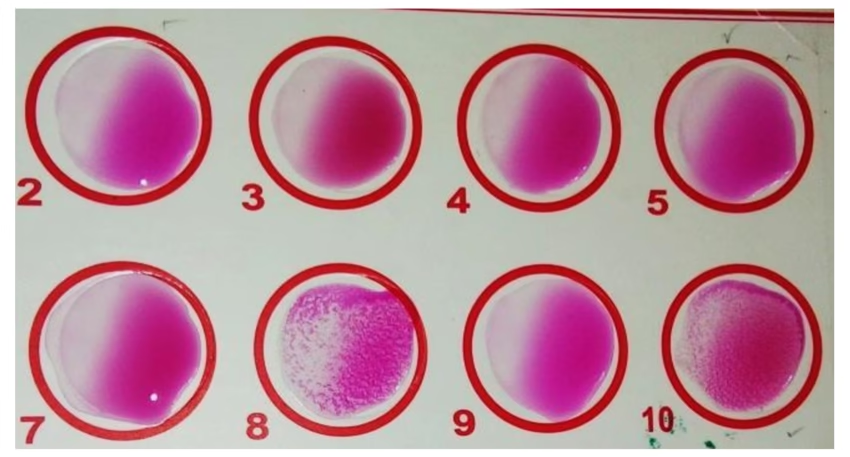
- Positive: Visible clumping indicates the presence of antibodies against Brucella.
- Negative: No clumping indicates the absence of detectable antibodies.
Tube Agglutination Test (Quantitative Method)
This method determines the antibody titer in the patient’s serum through serial dilutions.
Steps:
- Collect the patient’s serum and prepare the required serial dilutions.
- Label a series of test tubes with the appropriate serum dilutions.
- Prepare serial dilutions, for example: 1:20, 1:40, 1:80, 1:160, 1:320.
- Add a standardized amount of Brucella antigen to each tube.
- Mix the contents of each tube properly.
- Include appropriate positive and negative controls.
- Incubate the tubes according to the manufacturer’s instructions.
- Examine the tubes for visible agglutination.
- Determine the highest serum dilution showing a definite positive agglutination reaction.
- This highest positive dilution is reported as the antibody titer.
- A higher titer indicates a greater level of detectable Brucella antibodies, but the result must be interpreted with clinical findings and local laboratory criteria.
Interpretation:
- The highest serum dilution showing at least 50% agglutination is recorded as the antibody titer.
Results
Qualitative Results:
- Positive: Presence of agglutination (clumping). Indicates exposure to Brucella.
- Negative: Absence of agglutination. No detectable antibodies.
Quantitative Results:
- Titer: Expressed as the reciprocal of the highest serum dilution, showing significant agglutination.
Diagnostic Criteria:
- <1:40: Negative or insignificant titer, unlikely brucellosis.
- 1:80 to 1:160: Suggestive of exposure or early infection.
- >1:160: Indicates active infection or significant exposure.
Clinical Significance
- Diagnosis of Brucellosis:
- A positive result strongly supports the diagnosis, especially when correlated with clinical signs like fever, sweating, joint pain, and hepatosplenomegaly.
- Monitoring Disease Progression:
- Rising titers in sequential tests confirm an ongoing or worsening infection.
- Decreasing titers indicates recovery or successful treatment.
- Differential Diagnosis:
- Helps differentiate brucellosis from other febrile illnesses.
- Epidemiological Surveillance:
- Useful in regions where brucellosis is endemic, especially among occupationally exposed groups (e.g., farmers, and veterinarians).
Limitations
- Non-Specificity:
- Cross-reactivity with other Gram-negative bacteria, such as Yersinia enterocolitica, Escherichia coli, or Francisella tularensis, may produce false positives.
- Timing of Testing:
- Antibodies may not be detectable during the early stages of infection. A repeat test after 1–2 weeks is recommended for better sensitivity.
- Chronic Brucellosis:
- Persistently high antibody titers may indicate chronic infection but do not always indicate active disease.
- Test Performance:
- The sensitivity and specificity depend on the quality of antigens and reagents used.
Precautions
- Sample Collection:
- Avoid hemolysis or contamination during blood collection.
- Reagent Quality:
- Ensure standardized Brucella antigens and proper storage conditions.
- Correlate with Clinical Data:
- Positive results must always be interpreted alongside clinical findings and other diagnostic tests, such as PCR or blood culture.
- Repeat Testing:
- Repeating testing with serial samples may provide clarity if initial results are inconclusive.