Introduction
-
India is a developing country facing several major social problems that affect its growth and social stability.
-
Problems such as poverty, housing shortage, food insecurity, illiteracy, prostitution, and the dowry system create serious challenges for society.
-
These issues are linked to inequality, unemployment, traditional beliefs, and lack of awareness.
-
Understanding these social problems helps students analyze their causes, effects, and possible solutions.
-
Sociology also explains important concepts like culture and civilization, which influence social behavior and development.
-
Studying both social problems and these concepts gives a clear understanding of how society functions and progresses.
Part I: Major Social Problems in India
1. Poverty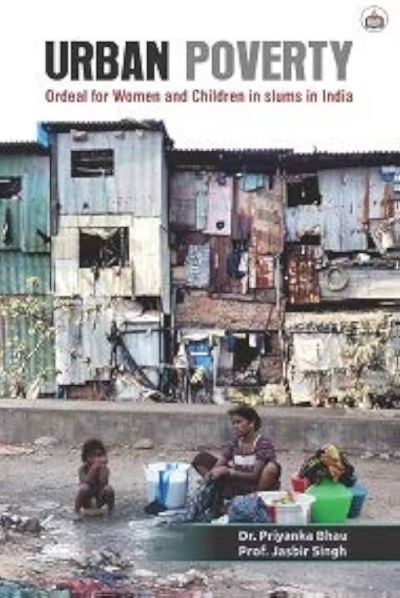
Causes
-
Unemployment and underemployment
-
Rapid population growth
-
Low wages
-
Illiteracy
-
Unequal distribution of wealth
-
Lack of industrial development in rural areas
Effects
-
Malnutrition
-
Poor health
-
Child labor
-
Crime
-
Low standard of living
Government Measures
-
Public Distribution System (PDS)
-
MGNREGA
-
Skill development programs
-
Poverty alleviation schemes
2. Housing Problem

Causes
-
Urban migration
-
Rapid population growth
-
High land prices
-
Poverty
Effects
-
Growth of slums
-
Overcrowding
-
Spread of diseases
-
Poor sanitation
Solutions
-
Affordable housing schemes
-
Urban planning
-
Slum rehabilitation programs
3. Food Supply Problem

Food supply problem refers to inadequate availability and unequal distribution of food.
Causes
-
Poverty
-
Poor agricultural productivity
-
Natural disasters
-
Hoarding and black marketing
Effects
-
Malnutrition
-
Starvation
-
Health problems
-
Infant mortality
Measures
-
Green Revolution
-
Food security schemes
-
Mid-day meal program
-
Public Distribution System
4. Illiteracy
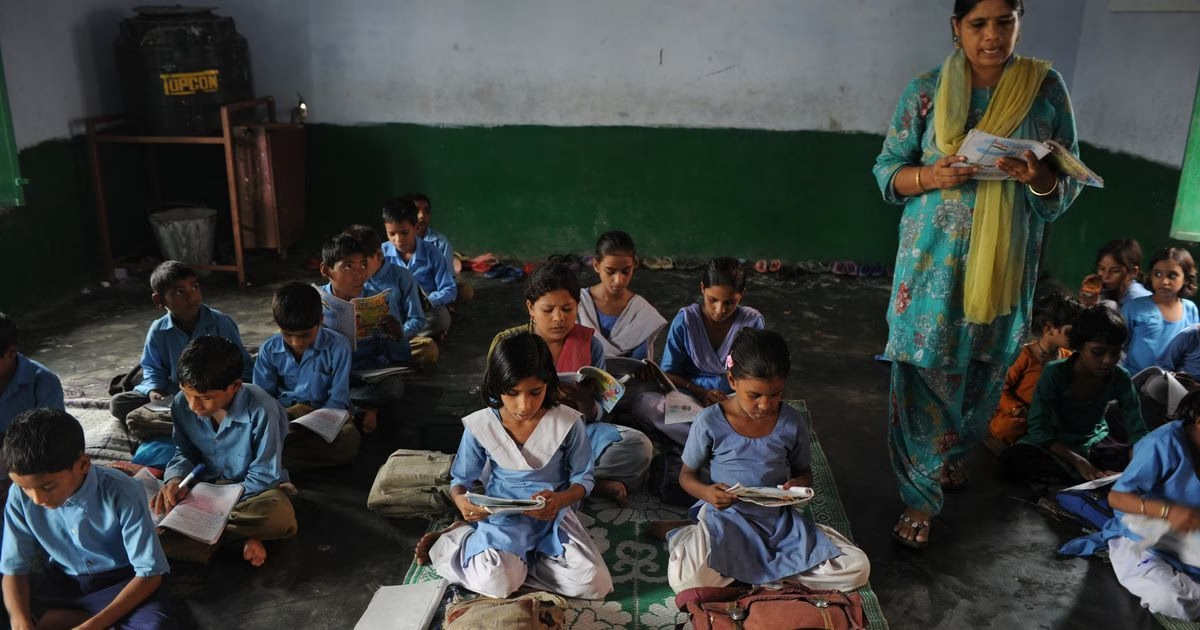
Illiteracy is the inability to read and write.
Causes
-
Poverty
-
Gender discrimination
-
Child labor
-
Lack of schools in rural areas
Effects
-
Unemployment
-
Exploitation
-
Poor health awareness
-
Slow national development
Solutions
-
Free and compulsory education
-
Adult education programs
-
Girl child education initiatives
5. Prostitution

Prostitution is the practice of engaging in sexual activities for money.
Causes
-
Poverty
-
Human trafficking
-
Lack of education
-
Social inequality
-
Gender discrimination
Effects
-
Spread of sexually transmitted diseases
-
Exploitation of women and children
-
Social stigma
-
Mental trauma
Preventive Measures
-
Rehabilitation programs
-
Strict laws against trafficking
-
Skill development for vulnerable women
-
Social awareness campaigns
6. Dowry System

Dowry is the practice of giving money, property, or gifts by the bride’s family to the groom’s family at the time of marriage.
Causes
-
Patriarchal society
-
Social status competition
-
Greed
-
Traditional beliefs
Effects
-
Dowry harassment
-
Domestic violence
-
Dowry deaths
-
Financial burden on bride’s family
Legal Provision
The Dowry Prohibition Act makes giving and taking dowry a punishable offense.
Part II: Difference Between Culture and Civilization
Understanding culture and civilization is important in sociology.
Meaning of Culture
Culture refers to the beliefs, values, customs, traditions, language, art, and moral practices of a society.
Examples:
-
Festivals
-
Dress patterns
-
Religious practices
-
Food habits
Culture is:
-
Internal
-
Emotional
-
Spiritual
-
Traditional
Meaning of Civilization
Civilization refers to the material and technological advancement of a society.
Examples:
-
Buildings
-
Transport systems
-
Technology
-
Communication systems
Civilization is:
-
External
-
Material
-
Mechanical
-
Progressive
Differences Between Culture and Civilization
| Basis | Culture | Civilization |
|---|---|---|
| Nature | Moral and spiritual | Material and technological |
| Change | Slow change | Rapid change |
| Measurement | Cannot be measured easily | Can be measured |
| Example | Traditions, beliefs | Roads, machines |
| Stability | More stable | Changes quickly |