
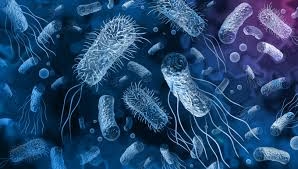
Salmonella
Introduction Salmonella is a clinically important Gram-negative bacterium belonging to the family Enterobacteriaceae. It is a major cause of food-borne […]
Introduction Salmonella is a clinically important Gram-negative bacterium belonging to the family Enterobacteriaceae. It is a major cause of food-borne […]
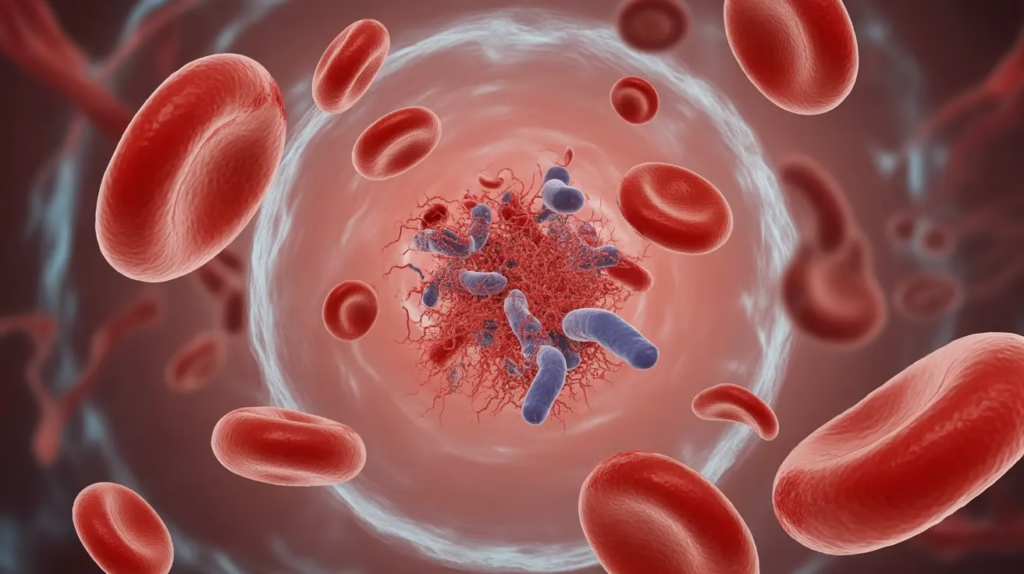
Introduction Blood transfusion is a life-saving therapeutic procedure widely used in medical and surgical practice, but it is not without
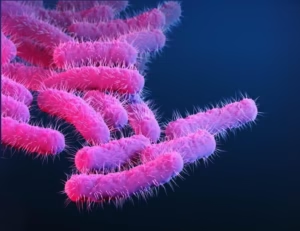
Introduction Shigella is a Gram-negative, non-motile, non-spore-forming bacillus. It belongs to the family Enterobacteriaceae. Shigella is the causative agent of
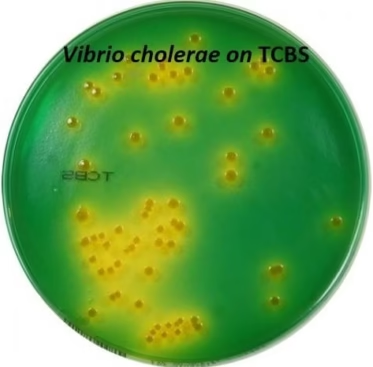
Introduction Vibrio cholerae is a Gram-negative, curved (comma-shaped), motile bacterium. It is the causative agent of cholera, an acute water-borne
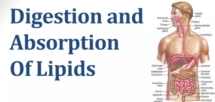
Introduction Lipids are an important dietary component that provide energy and help in absorption of fat-soluble vitamins. Due to their

Introduction Streptococci are Gram-positive, spherical (cocci) bacteria that typically arrange in chains or pairs. They belong to the family Streptococcaceae
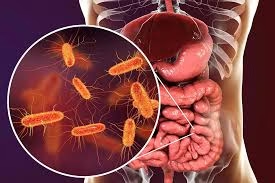
Introduction Escherichia coli (E. coli) is a Gram-negative, rod-shaped bacterium belonging to the family Enterobacteriaceae. It is a normal commensal
Introduction Blood transfusion is a life-saving medical procedure widely used in anemia, trauma, surgery, obstetric emergencies, hematological disorders, and critical
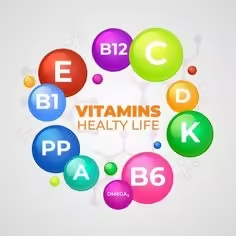
Introduction Vitamins are organic micronutrients required in small amounts for normal metabolism, growth, and health.They cannot be synthesized adequately by
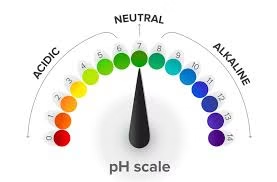
Definition Acid-base balance regulates the body’s hydrogen ion (H⁺) concentration to maintain the blood’s pH within the normal range of 7.35–7.45. Maintaining
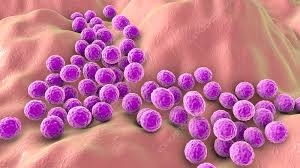
Introduction Staphylococci are Gram-positive cocci that typically appear in grape-like clusters due to division in multiple planes. They are non-motile,
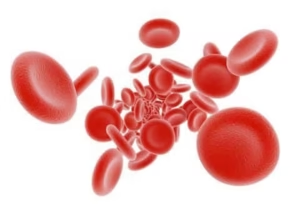
Introduction Abnormal haemoglobins are variations in the haemoglobin molecule that result from genetic mutations affecting the globin chains. These abnormalities
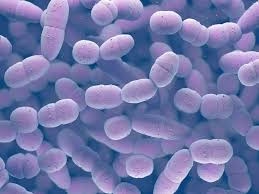
Introduction Streptococcus pneumoniae is a significant human pathogen responsible for various serious infections, including pneumonia, meningitis, and otitis media. Understanding

Discovery of Blood Groups The discovery of blood groups is one of the most influential breakthroughs in medical science. Today,
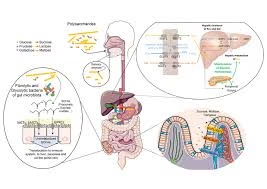
Introduction Carbohydrates are a major dietary energy source and must be broken into simple sugars before absorption. The diet contains
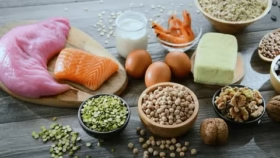
Sources of Amino Acids Dietary proteins – obtained from food and digested into amino acids. Degradation of body (tissue) proteins
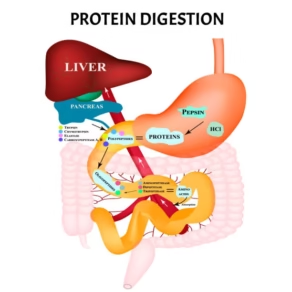
Introduction Proteins are fundamental macronutrients that form the structural and functional framework of life. Every living cell depends on proteins
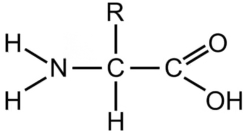
Amino Acids Amino acids are the structural units (monomers) of proteins. An amino acid comprises two functional groups—amino (–NH2), and
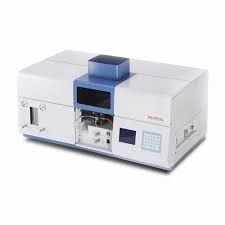
Introduction Atomic Absorption Spectroscopy (AAS) is an analytical technique used to determine the concentration of specific metal elements in a
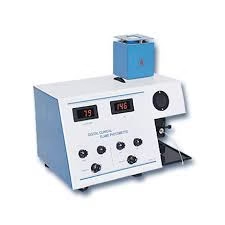
Introduction Flame photometry is an analytical technique used to determine the concentration of metal ions, primarily those of alkali and

Introduction A spectrophotometer is an instrument used to measure how much light a substance absorbs at a particular wavelength. It

Introduction A colorimeter is a device that measures the intensity of color or the absorbance of light by a solution.

Introduction The ABO blood group system is the most important classification used for blood transfusions, categorizing human blood into four

Introduction Enzymes are biological catalysts—usually proteins—that speed up chemical reactions in living organisms without being consumed in the process. Definition:
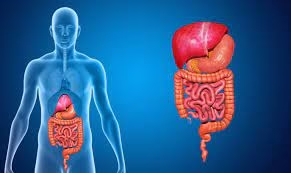
Introduction The digestive system consists of the oral cavity and a hollow tubular gastrointestinal tract (GIT) plus digestive glands associated

Proteinuria Introduction Proteinuria is the abnormal presence of protein in the urine, often exceeding 150 mg/day in adults. It can
Introduction Plasma proteins are a heterogeneous group found in blood plasma, constituting a significant blood component. They originate primarily from
Introduction Proteins are the high molecular weight mixed polymers of α-amino acids joined with peptide linkage (-CO-N H-). Proteins are
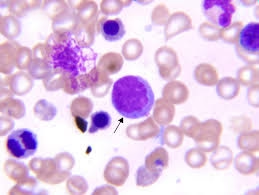
Introduction Bone marrow is the main factory of blood cells. It produces red cells, white cells, and platelets. Many blood
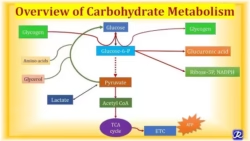
Digestion of Carbohydrates The principal sites of carbohydrate digestion are the mouth and small intestine. The dietary carbohydrate consists of: