
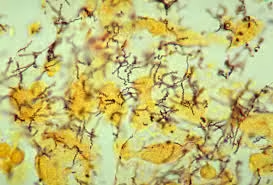
Treponema
Introduction Treponema species are thin, spiral-shaped bacteria belonging to the family Spirochaetaceae. Among them, Treponema pallidum is the most medically […]
Introduction Treponema species are thin, spiral-shaped bacteria belonging to the family Spirochaetaceae. Among them, Treponema pallidum is the most medically […]

Introduction Microtomes are precision laboratory instruments used for cutting uniform, ultra-thin sections of specimens. They are essential in histology, pathology,
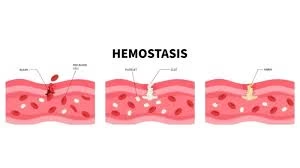
Introduction Hemostasis is the physiological process that prevents excessive blood loss following injury to a blood vessel. It maintains a
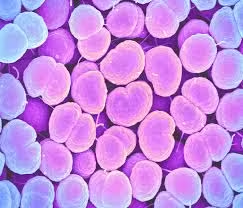
Introduction Neisseria is a genus of Gram-negative, aerobic diplococci that are exclusively human pathogens. Most species are commensals of the
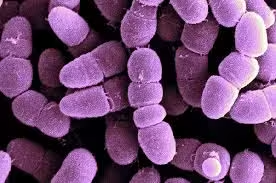
Introduction Clostridium is a genus of Gram-positive, spore-forming, obligate anaerobic bacilli of major medical importance. These organisms are widely distributed
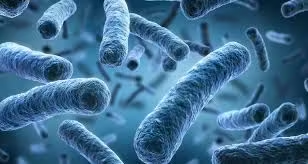
Introduction Bacillus is a genus of Gram-positive, rod-shaped bacteria Belongs to the family Bacillaceae Widely distributed in soil, water, air,
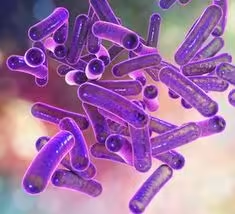
Introduction Brucella is a genus of Gram-negative, facultative intracellular coccobacilli. Brucella species are the causative agents of brucellosis, also known
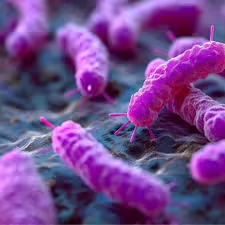
Introduction Bordetella is a genus of small, Gram-negative, aerobic coccobacilli. Bordetella pertussis is the principal causative agent of whooping cough
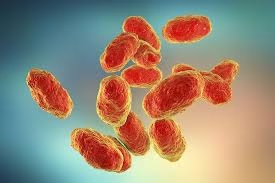
Introduction Haemophilus is a genus of small, pleomorphic, Gram-negative bacteria commonly found in the human upper respiratory tract. Members of
Introduction Compatibility test in blood transfusion, also called crossmatching, is a pre-transfusion laboratory procedure. It is performed to ensure that
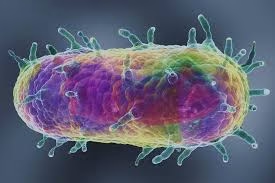
Introduction Yersinia is a genus of Gram-negative bacteria belonging to the family Enterobacteriaceae. Members of this genus are short, rod-shaped

Introduction Microbial culture is a fundamental laboratory technique used for isolation, identification, and characterization of pathogenic microorganisms. Culture methods allow
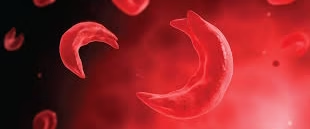
Introduction Degradation pigments of haemoglobin are coloured products formed during the normal breakdown of haemoglobin. Haemoglobin degradation occurs after the
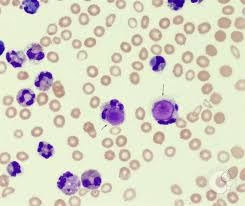
Introduction The LE (Lupus Erythematosus) cell phenomenon is a classical immuno-hematological finding associated with autoimmune diseases. It was first described

Introduction Hemoglobin is a complex iron-containing protein present in red blood cells. It is responsible for the transport of oxygen
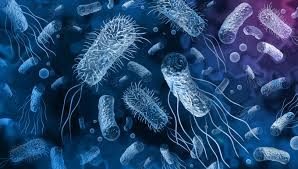
Introduction Salmonella is a clinically important Gram-negative bacterium belonging to the family Enterobacteriaceae. It is a major cause of food-borne
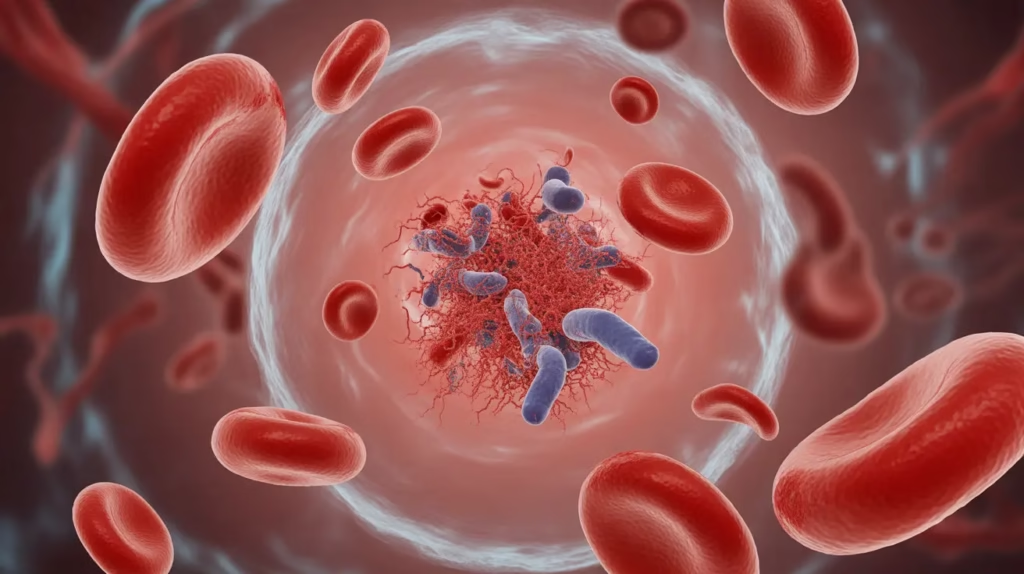
Introduction Blood transfusion is a life-saving therapeutic procedure widely used in medical and surgical practice, but it is not without
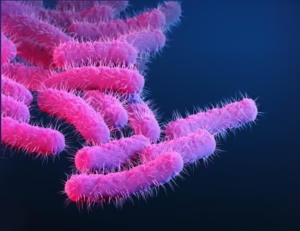
Introduction Shigella is a Gram-negative, non-motile, non-spore-forming bacillus. It belongs to the family Enterobacteriaceae. Shigella is the causative agent of
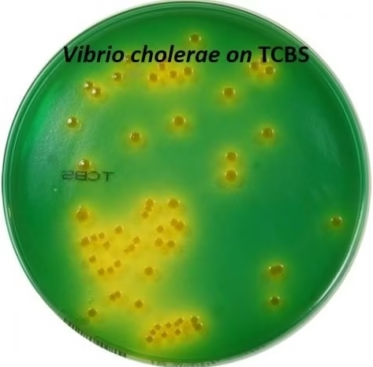
Introduction Vibrio cholerae is a Gram-negative, curved (comma-shaped), motile bacterium. It is the causative agent of cholera, an acute water-borne
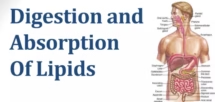
Introduction Lipids are an important dietary component that provide energy and help in absorption of fat-soluble vitamins. Due to their
Introduction Streptococci are Gram-positive, spherical (cocci) bacteria that typically arrange in chains or pairs. They belong to the family Streptococcaceae
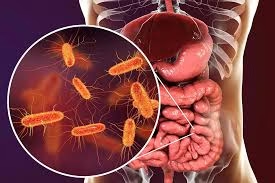
Introduction Escherichia coli (E. coli) is a Gram-negative, rod-shaped bacterium belonging to the family Enterobacteriaceae. It is a normal commensal
Introduction Antiseptics and disinfectants are chemical agents used to control the growth of microorganisms and prevent infections. They play a
Introduction Blood transfusion is a life-saving medical procedure widely used in anemia, trauma, surgery, obstetric emergencies, hematological disorders, and critical
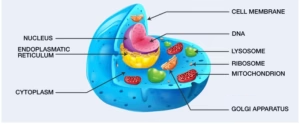
Introduction The cell is the smallest living unit capable of carrying out all vital life processes. In anatomy and physiology,
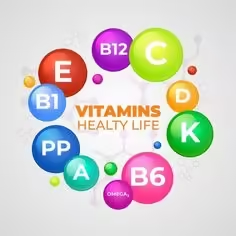
Introduction Vitamins are organic micronutrients required in small amounts for normal metabolism, growth, and health.They cannot be synthesized adequately by
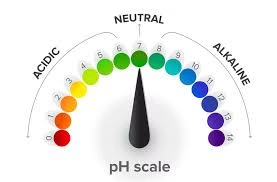
Definition Acid-base balance regulates the body’s hydrogen ion (H⁺) concentration to maintain the blood’s pH within the normal range of 7.35–7.45. Maintaining
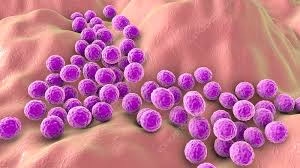
Introduction Staphylococci are Gram-positive cocci that typically appear in grape-like clusters due to division in multiple planes. They are non-motile,
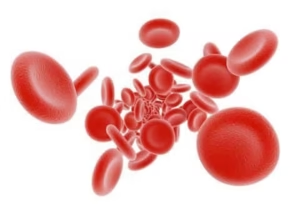
Introduction Abnormal haemoglobins are variations in the haemoglobin molecule that result from genetic mutations affecting the globin chains. These abnormalities

Introduction Urine is the final excretory product formed by the kidneys and reflects overall metabolic and renal function. Normal urine