
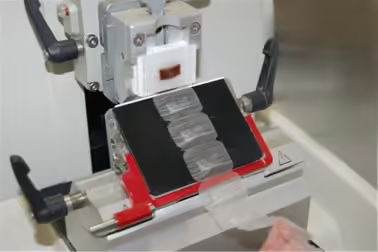
Practical section cutting
Introduction Practical section cutting is one of the most important technical procedures in histopathology because the final microscopic diagnosis depends […]
Introduction Practical section cutting is one of the most important technical procedures in histopathology because the final microscopic diagnosis depends […]

Introduction Quality control in histopathology means a systematic process of monitoring all laboratory activities to ensure that tissue diagnosis is

Introduction Immunohistochemistry is one of the most important diagnostic techniques used in modern pathology for identification of specific cellular antigens

Introduction Recombinant DNA technology is a modern biological technique used to combine DNA from two different organisms. In this method,

Introduction In medical practice, a syndrome means a group of symptoms and signs that appear together and suggest a particular

Introduction Ultracentrifugation is an advanced centrifugation technique used in laboratories to separate very small biological particles. It is commonly used

Introduction Accurate microbiological diagnosis depends largely on the quality of the clinical sample that reaches the laboratory. The process begins
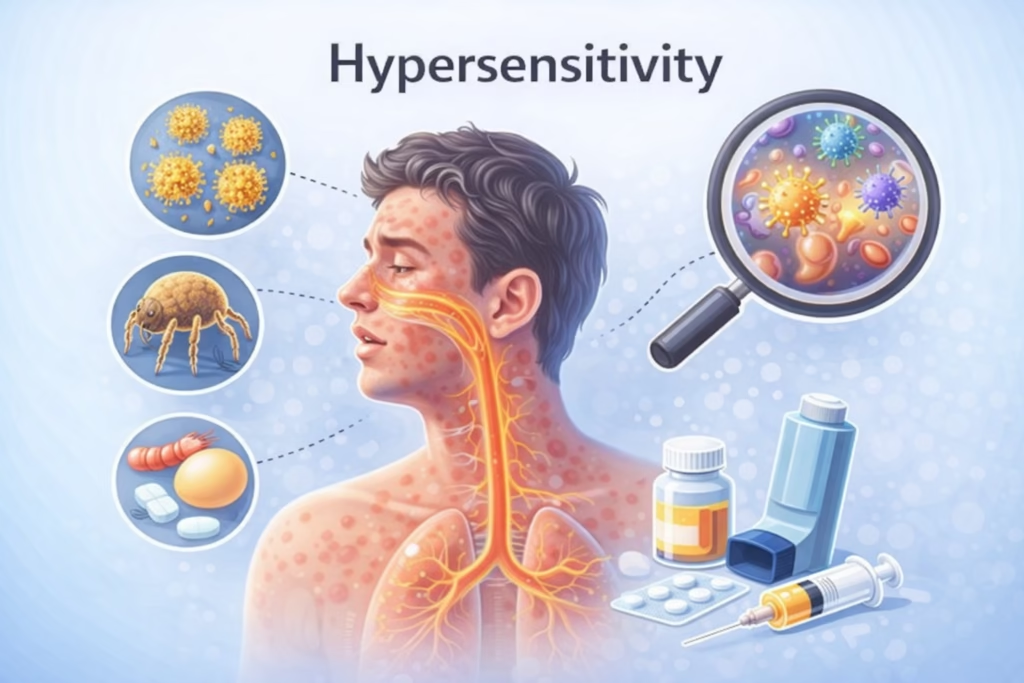
Introduction Hypersensitivity is an exaggerated or inappropriate immune response to an antigen (allergen) that leads to tissue damage and pathological
Introduction Lipids are a diverse group of organic biomolecules that are insoluble in water but soluble in non-polar organic solvents such
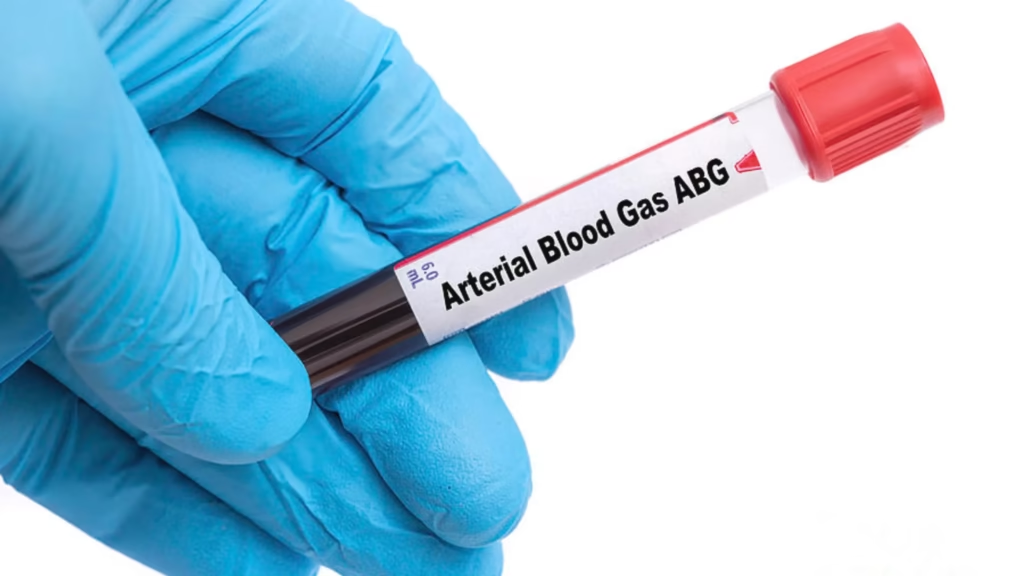
Introduction Blood gas analysis is a vital diagnostic tool used to evaluate: Oxygenation status Ventilation status Acid–base balance It helps

Caloric Value of Foods The caloric value of food refers to the amount of energy released when food is completely
Introduction Bacteria are unicellular prokaryotic microorganisms that show remarkable diversity in shape, size, and arrangement. Morphology is one of the
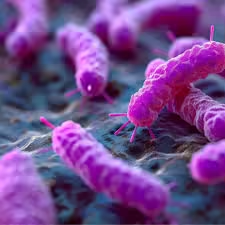
Introduction Microbes (microorganisms) are tiny living organisms that cannot be seen with the naked eye. They are present everywhere in
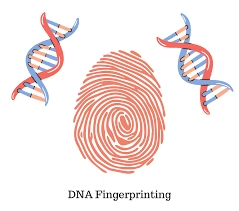
Introduction DNA fingerprinting is a molecular technique used to identify individuals based on unique patterns in their DNA. Except for

Introduction Microtome knives and knife sharpening are essential in laboratories, especially in histology and materials science, for preparing ultra-thin specimen
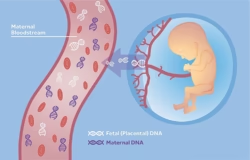
Introduction Prenatal diagnosis refers to medical tests performed during pregnancy to detect genetic, chromosomal, and congenital abnormalities in the fetus.

Introduction Mutation refers to a heritable and permanent change in the nucleotide sequence of genetic material (DNA or RNA). Mutations
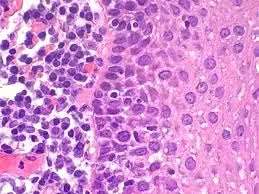
Introduction Hematoxylin and Eosin staining (H&E) is the most commonly used routine staining technique in histopathology. It is the first-line
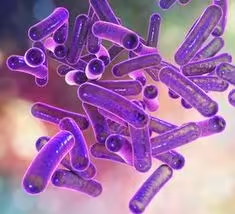
Introduction Brucella is a genus of Gram-negative, facultative intracellular coccobacilli. Brucella species are the causative agents of brucellosis, also known
Introduction Bordetella is a genus of small, Gram-negative, aerobic coccobacilli. Bordetella pertussis is the principal causative agent of whooping cough

Introduction Ageing is a complex, progressive, and irreversible biological process. It is characterized by a gradual decline in physiological and
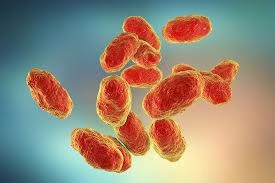
Introduction Haemophilus is a genus of small, pleomorphic, Gram-negative bacteria commonly found in the human upper respiratory tract. Members of
Introduction Microbial culture is a fundamental laboratory technique used for isolation, identification, and characterization of pathogenic microorganisms. Culture methods allow
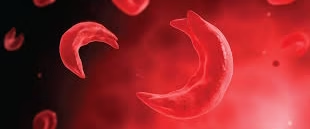
Introduction Degradation pigments of haemoglobin are coloured products formed during the normal breakdown of haemoglobin. Haemoglobin degradation occurs after the
Introduction Xenobiotics are chemical substances that are foreign to the human body and are not normally produced during metabolism. Common

Introduction Nucleic acids are high–molecular-weight biological macromolecules that store, transmit, and express genetic information. Chemically, they are polymers of nucleotides
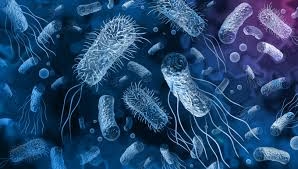
Introduction Salmonella is a clinically important Gram-negative bacterium belonging to the family Enterobacteriaceae. It is a major cause of food-borne
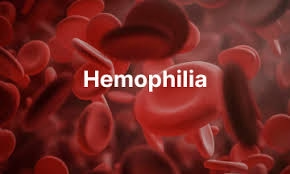
Introduction Haemophilia is a hereditary bleeding disorder caused by deficiency of specific coagulation factors. It results in prolonged or spontaneous
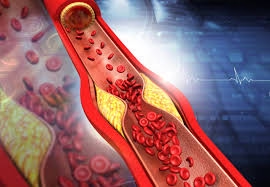
Introduction Cholesterol is a vital sterol lipid essential for normal structure and function of cell membranes, synthesis of steroid hormones,
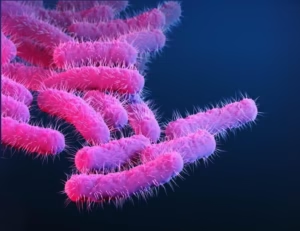
Introduction Shigella is a Gram-negative, non-motile, non-spore-forming bacillus. It belongs to the family Enterobacteriaceae. Shigella is the causative agent of